
Every SaaS development company promises quality, but how do you know which one delivers? You’ve checked websites and reviews, yet finding the right partner still feels confusing. Similar services, unclear pricing, and big promises make comparing companies harder than expected.
Choosing the wrong team can lead to delays, extra costs, and disappointing results. That’s why comparing the top SaaS development companies before hiring is so important. You need clear information about their experience, services, and suitability for your project.
We’ve compared 15 SaaS development companies to help you make an informed choice. You’ll discover their strengths, pricing, services, and ideal project types. We’ll also explain development costs and what to check before choosing your SaaS partner.
Top SaaS Development Companies at a Glance
The top SaaS development companies in 2026 include Simform, ScienceSoft, BairesDev, Innowise, and 11 other established providers. These companies specialize in areas such as custom software, cloud engineering, startup MVPs, and enterprise applications. The following comparison helps you identify suitable development partners based on your project requirements.
| Company | Location | Best For | Core Services | Hourly Rate | Key Strength |
| Simform | USA | Cloud-based SaaS | Product engineering, cloud, AI | $25 to $49 | Cloud engineering |
| ScienceSoft | USA | Regulated industries | SaaS, cybersecurity, consulting | $50 to $99 | Security expertise |
| BairesDev | USA | Nearshore development | Custom software, dedicated teams | $50 to $99 | Engineering capacity |
| Innowise | Poland | Enterprise SaaS | SaaS, cloud, AI, modernization | $50 to $99 | Broad technical expertise |
| Intellectsoft | USA | Enterprise modernization | SaaS, cloud, AI, integrations | $50 to $99 | Enterprise architecture |
| Tezeract | Pakistan | AI-powered SaaS | AI, automation, web applications | $50 to $99 | Applied AI development |
| Space-O Technologies | India | Web and mobile SaaS | Custom software, mobile, cloud | $25 to $49 | Cross-platform development |
| UpsilonIT | USA | Startup MVPs | MVPs, SaaS, team augmentation | $25 to $49 | Startup product development |
| SolveIt | Poland | Startup applications | MVPs, design, web and mobile | $25 to $49 | Product discovery |
| Blackthorn Vision | Poland | Custom SaaS engineering | Software, AI, dedicated teams | $25 to $49 | Technical specialization |
| Brocoders | Estonia | SaaS startups | SaaS, web development, AI | $50 to $99 | SaaS product engineering |
| DevSquad | USA | Laravel SaaS | Custom software, UX/UI | $50 to $99 | Iterative development |
| ELEKS | Estonia | Enterprise platforms | Cloud, software, cybersecurity | $50 to $99 | Enterprise engineering |
| Apptunix | India | Web and mobile products | SaaS, mobile, cloud, AI | $25 to $49 | Product engineering |
| Dreamix | Bulgaria | Enterprise applications | Custom software, AI, consulting | $25 to $49 | Long-term engineering |
The listed hourly rates come from Clutch profiles and represent advertised ranges, not guaranteed project quotes. Actual development costs depend on application complexity, team size, delivery schedule, and contract terms. A company with a lower hourly rate may still require a larger overall project budget.
For example, Clutch lists Simform’s minimum project size at $25,000 and ScienceSoft’s at $5,000. This distinction matters when comparing providers for a startup MVP or enterprise SaaS project. Always request a written proposal before making a final decision.
15 Best SaaS Development Companies in 2026
The 15 SaaS development companies below offer different capabilities for startups, growing businesses, and enterprises. Some focus on cloud infrastructure, while others specialize in product development, artificial intelligence, or dedicated engineering teams. Understanding those differences helps you shortlist companies that match your specific requirements.
1. Simform
Simform is a software engineering company specializing in cloud platforms, custom applications, and digital product development. Founded in 2010, it has a business presence in Orlando, Florida, alongside international delivery operations. Its services support growing software businesses and enterprises developing complex digital products.
Simform offers product engineering, cloud architecture, data engineering, AI development, and managed services. Its work covers infrastructure planning, application development, and integration with existing business software. SaaS companies can use these capabilities to build new platforms or modernize older applications.
Cloud engineering is one of Simform’s main differentiators. The company works across cloud infrastructure, application architecture, and ongoing platform improvement. This combination is relevant when customer growth increases infrastructure and performance requirements.
Best for: SaaS businesses requiring scalable cloud infrastructure, enterprise integrations, or dedicated engineering support.
Key strengths: Cloud platform engineering, product development, AI capabilities, and access to engineering teams.
Potential limitations: Its published $25,000 minimum project size may exclude smaller prototype budgets. Founders should also clarify the scope of any proposed cloud architecture work.
Pricing: Clutch lists hourly rates of $25 to $49, with a $25,000 minimum project size.
2. ScienceSoft
ScienceSoft provides custom software development, SaaS engineering, and cybersecurity services for businesses with complex requirements. Founded in 1989, the company operates from McKinney, Texas, with additional international offices. Its work includes healthcare, financial services, insurance, and enterprise software.
ScienceSoft develops cloud applications, customer portals, business management platforms, and integrated software systems. Its services also cover technology consulting, software testing, modernization, and long term maintenance. This makes it relevant for businesses replacing older applications with subscription based software.
Security expertise is an important part of ScienceSoft’s positioning. The company reports certifications including ISO 9001 and ISO/IEC 27001. However, buyers should still verify which security controls apply to their specific project.
Best for: Healthcare, finance, insurance, and enterprise SaaS products requiring careful security planning.
Key strengths: Regulated industry experience, cybersecurity services, enterprise integration, and software modernization.
Potential limitations: Complex delivery processes may be unnecessary for a basic startup MVP. Buyers should confirm the proposed team size, scope, and expected timeline.
Pricing: Clutch lists $50 to $99 hourly and a $5,000 minimum project size.
3. BairesDev
BairesDev is a software development company known for nearshore engineering and dedicated technical teams. Founded in 2009, it operates from San Francisco and maintains development operations across Latin America. Its delivery model supports businesses expanding their engineering capacity without building every team internally.
BairesDev offers custom software development, staff augmentation, software testing, and cloud engineering. Its developers work with technologies such as React, Python, Java, and modern cloud platforms. These capabilities support SaaS product development, system integration, and application maintenance.
The company’s nearshore model is particularly relevant to North American buyers. Teams in overlapping time zones can make meetings, development reviews, and issue resolution easier. However, coordination still depends on the assigned team’s schedule and communication process.
Best for: US businesses seeking nearshore SaaS developers or additional engineering capacity.
Key strengths: Regional development coverage, flexible staffing arrangements, and experience supporting larger software projects.
Potential limitations: Staff augmentation works best when the client already has clear technical leadership. Smaller founders may prefer a provider offering complete product strategy and delivery.
Pricing: Clutch lists $50 to $99 hourly, with a $50,000 minimum project size.
4. Innowise
Innowise is an international software engineering company offering custom SaaS development, cloud services, and enterprise modernization. Founded in 2007, it maintains a substantial operating presence in Warsaw, Poland. The company serves industries including finance, healthcare, manufacturing, retail, and logistics.
Its services include custom applications, cloud migration, AI development, cybersecurity, and engineering team augmentation. Innowise works with technology stacks involving Java, Python, React, .NET, and major cloud platforms. This breadth supports both new SaaS products and modernization of existing enterprise software.
Innowise reports having more than 3,500 engineering specialists across its organization. That scale may help businesses requiring multiple technical disciplines within a single engagement. Buyers should still verify the availability and experience of their assigned developers.
Best for: Enterprises building feature rich SaaS applications or expanding existing product engineering teams.
Key strengths: Broad technical coverage, cloud development, AI services, and engineering capacity.
Potential limitations: Company-wide technical capability doesn’t guarantee every specialist will join your project. Request the proposed team’s experience and responsibilities before signing.
Pricing: Clutch lists $50 to $99 hourly and a $10,000 minimum project size.
5. Intellectsoft
Intellectsoft develops enterprise software, cloud applications, and custom digital products for established businesses. Founded in 2007, it operates from Miami, Florida, with additional international offices. Its services focus on businesses modernizing technology or developing complex software platforms.
The company provides product design, cloud development, AI integration, application modernization, and software engineering. Its technical capabilities cover frontend development, backend services, cloud infrastructure, and data management. These services can support SaaS products connected to existing enterprise software.
Intellectsoft is especially relevant when application development involves broader operational changes. For example, a company may need to connect its SaaS platform with accounting or customer management software. The development partner must understand both the new application and existing workflows.
Best for: Enterprises requiring custom SaaS development, legacy modernization, and system integration.
Key strengths: Enterprise consulting, software architecture, cloud migration, and business application integration.
Potential limitations: A published minimum engagement of $50,000 may exceed early startup budgets. Buyers should confirm whether strategic consulting is included in the development quote.
Pricing: Clutch lists $50 to $99 hourly, with a $50,000 minimum project size.
6. Tezeract
Tezeract is an AI development company offering intelligent software, automation, and custom SaaS solutions. Founded in 2020, it operates from Karachi, Pakistan. Its services are relevant to businesses adding machine learning or automated decision-making to software products.
Tezeract works on AI-powered applications, computer vision, natural language processing, and workflow automation. These capabilities can support SaaS products involving document analysis, intelligent recommendations, or automated customer interactions. It also develops custom applications that connect AI functionality with business operations.
The company’s specialization makes it different from broader enterprise software providers. It may appeal to businesses where AI functionality is central to the product rather than an optional feature. However, AI expertise alone doesn’t establish experience with every SaaS architecture requirement.
Best for: AI-focused SaaS startups and businesses developing intelligent automation platforms.
Key strengths: Machine learning, AI integration, document processing, and automation expertise.
Potential limitations: Buyers should verify experience with subscription billing, multi-tenant architecture, and long-term cloud operations.
Pricing: Clutch lists $50 to $99 hourly and a $5,000 minimum project size.
7. Space-O Technologies
Space-O Technologies provides custom software development, mobile applications, and cloud-based product engineering. Founded in 2010, the company operates from Ahmedabad, India, with additional North American locations. Its services support startups and established businesses developing customer-facing applications.
The company offers web development, mobile engineering, SaaS application development, cloud integration, and UI/UX design. These capabilities help businesses create products accessible through browsers and mobile devices. A SaaS platform might combine an administrative dashboard with a companion mobile application.
Its cross-platform development experience is particularly relevant when customers need consistent functionality across devices. For example, a service management platform may require both office dashboards and fieldworker mobile access. Buyers should confirm whether the company has handled similar user permissions and data synchronization requirements.
Best for: SaaS products requiring connected web and mobile applications.
Key strengths: Mobile development, web engineering, product design, and cloud integration.
Potential limitations: Enterprise buyers should request evidence of large-scale SaaS architecture and relevant compliance experience.
Pricing: Clutch lists $25 to $49 hourly, with a $25,000 minimum project size.
8. UpsilonIT
UpsilonIT, operating as Upsilon, focuses on startup MVP development and software product engineering. Founded in 2012, it has a US business presence and European offices. Its services target founders validating software ideas and businesses expanding established products.
Upsilon offers MVP development, web engineering, product discovery, and dedicated development teams. Its technical capabilities include Python, Django, React, Next.js, and Node.js. These technologies support SaaS dashboards, customer portals, and subscription-based applications.
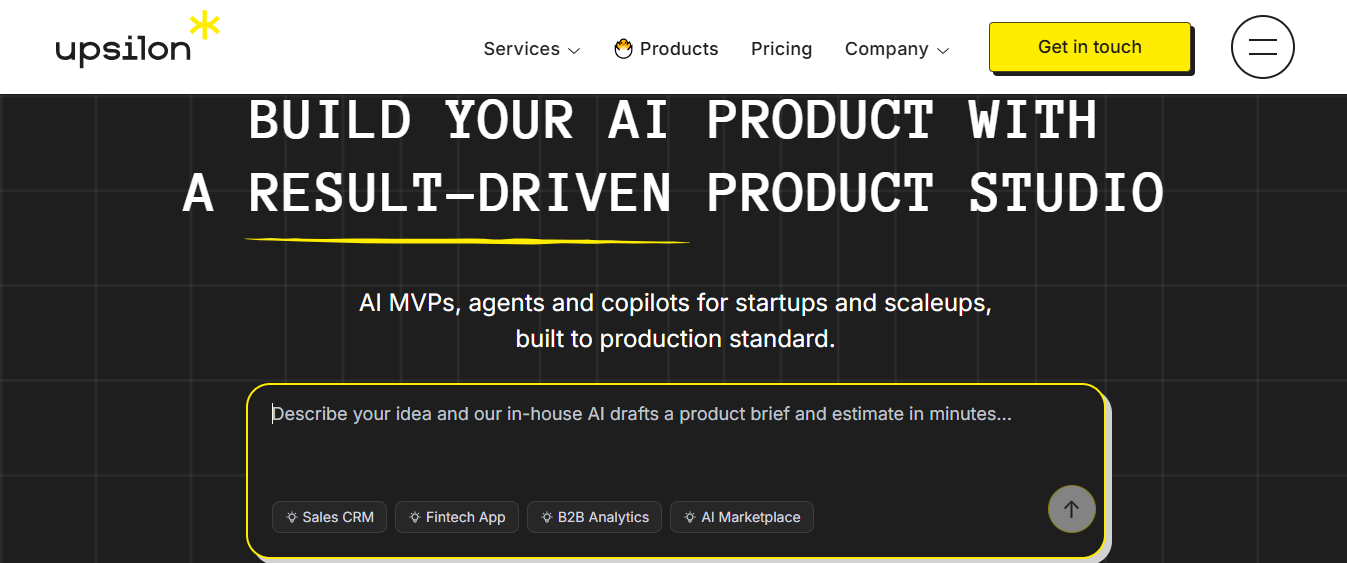
The company promotes an MVP development approach intended to help startups test business assumptions. Its published profile describes working product delivery within three months for certain engagements. That timeframe is a company offering, not a guarantee for every project.
Best for: Early-stage SaaS founders building MVPs and startups expanding validated products.
Key strengths: Startup product development, MVP planning, web engineering, and team augmentation.
Potential limitations: Buyers should evaluate the proposed MVP scope against their budget and product complexity. Its Clutch profile currently has no published client reviews.
Pricing: Clutch lists $25 to $49 hourly and a $25,000 minimum project size.
9. SolveIt
SolveIt develops custom web and mobile applications for startups and growing businesses. Founded in 2016, the company operates from Warsaw, Poland. Its services include product discovery, application design, development, testing, and support.
SolveIt helps founders define product requirements before committing to full development. Its work includes mobile software, web applications, UI/UX design, and MVP engineering. This approach is useful when a SaaS founder has a product concept but limited technical documentation.
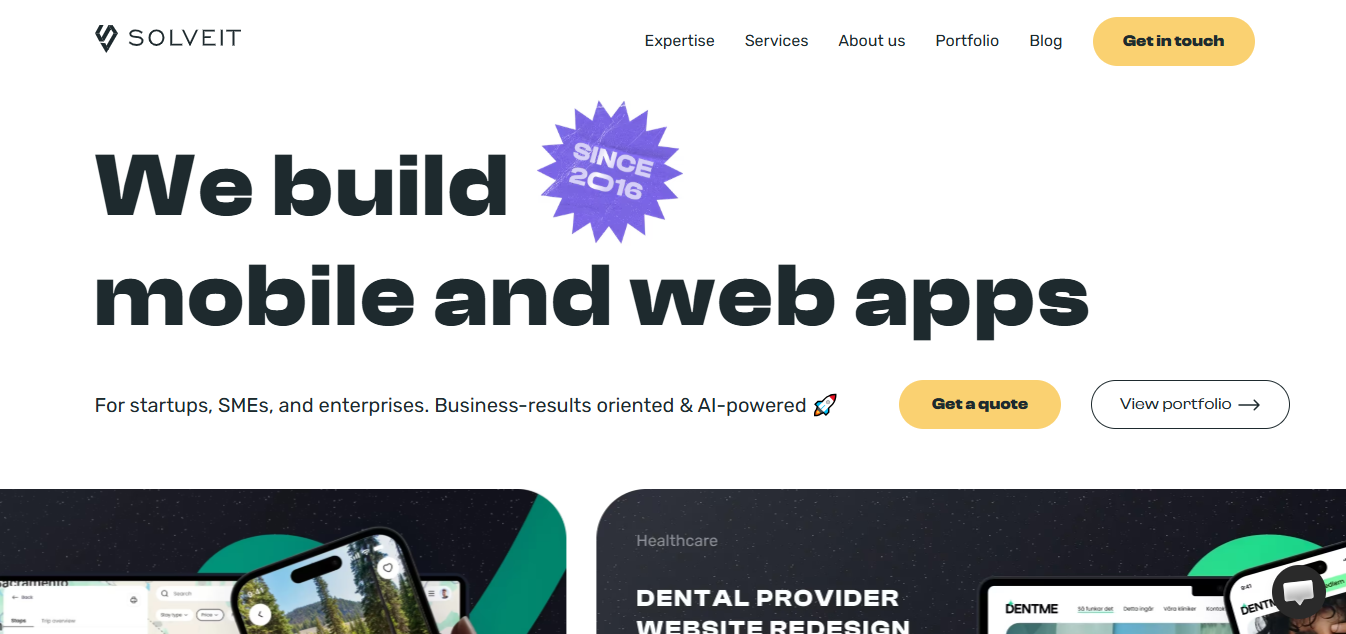
Product discovery can reduce misunderstandings about important functionality. For example, the team might first map registration, payments, user permissions, and reporting. That information then becomes part of the development scope and testing plan.
Best for: Startups requiring product design, MVP development, and connected web or mobile functionality.
Key strengths: Product discovery, interface design, mobile engineering, and structured development.
Potential limitations: Complex enterprise SaaS buyers should verify experience with large cloud deployments and specialized integrations.
Pricing: Clutch lists $25 to $49 hourly, with a $10,000 minimum project size.
10. Blackthorn Vision
Blackthorn Vision provides custom software development, technical consulting, and dedicated engineering teams. Founded in 2009, it operates from Warsaw, Poland, and Lviv, Ukraine. Its services support businesses developing complex applications or modernizing existing software.
The company offers custom application development, AI engineering, software architecture, and team augmentation. Its capabilities support SaaS products requiring specialized backend development and ongoing engineering work. It also works with businesses needing development support for established software platforms.
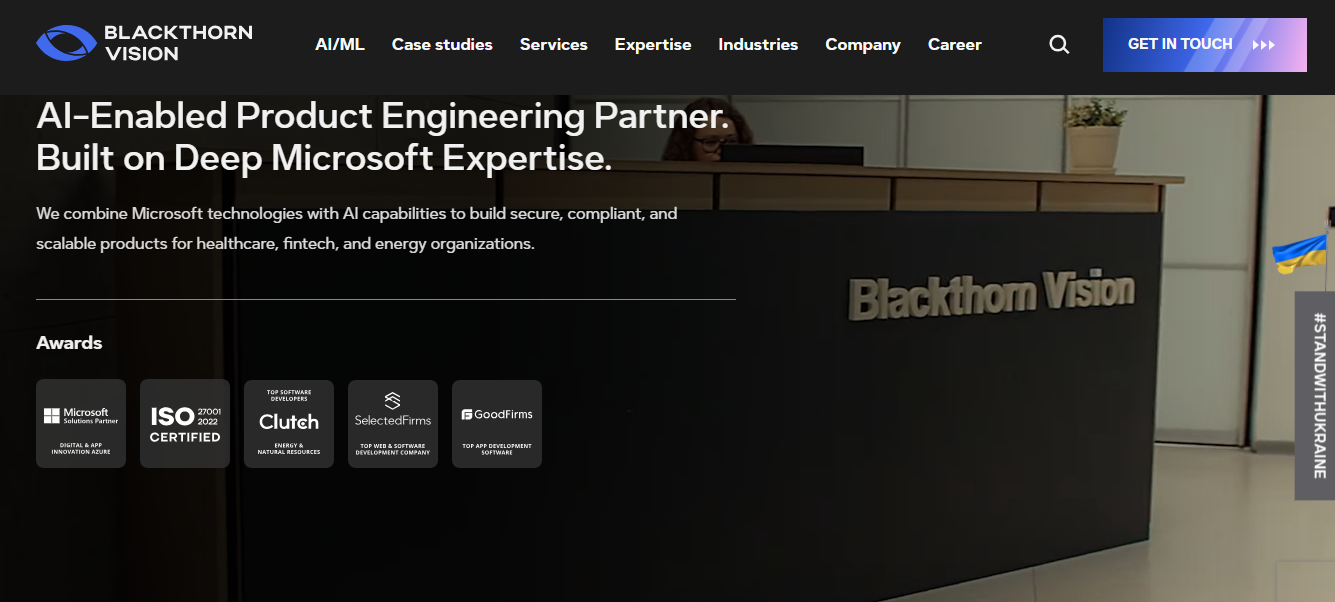
Blackthorn Vision may suit organizations that already understand their product requirements. Such businesses often need engineers who can integrate with an internal technical team. Project success then depends on clear ownership, shared documentation, and regular development reviews.
Best for: Established SaaS businesses requiring dedicated software engineers or custom platform modernization.
Key strengths: Specialized engineering, software architecture, technical collaboration, and long-term development support.
Potential limitations: Its $50,000 published minimum project size may not suit small MVP budgets. Buyers should also agree on responsibilities between internal and external developers.
Pricing: Clutch lists $25 to $49 hourly, with a $50,000 minimum project size.
11. Brocoders
Brocoders is a software development company specializing in SaaS applications and digital product engineering. Founded in 2014, it maintains its headquarters in Tallinn, Estonia. The company works with startups and growing businesses developing software products.
Brocoders provides SaaS development, product discovery, web engineering, AI integration, and dedicated development teams. Its technical capabilities include React, Next.js, Node.js, TypeScript, and React Native. These technologies support interactive SaaS platforms and connected mobile applications.
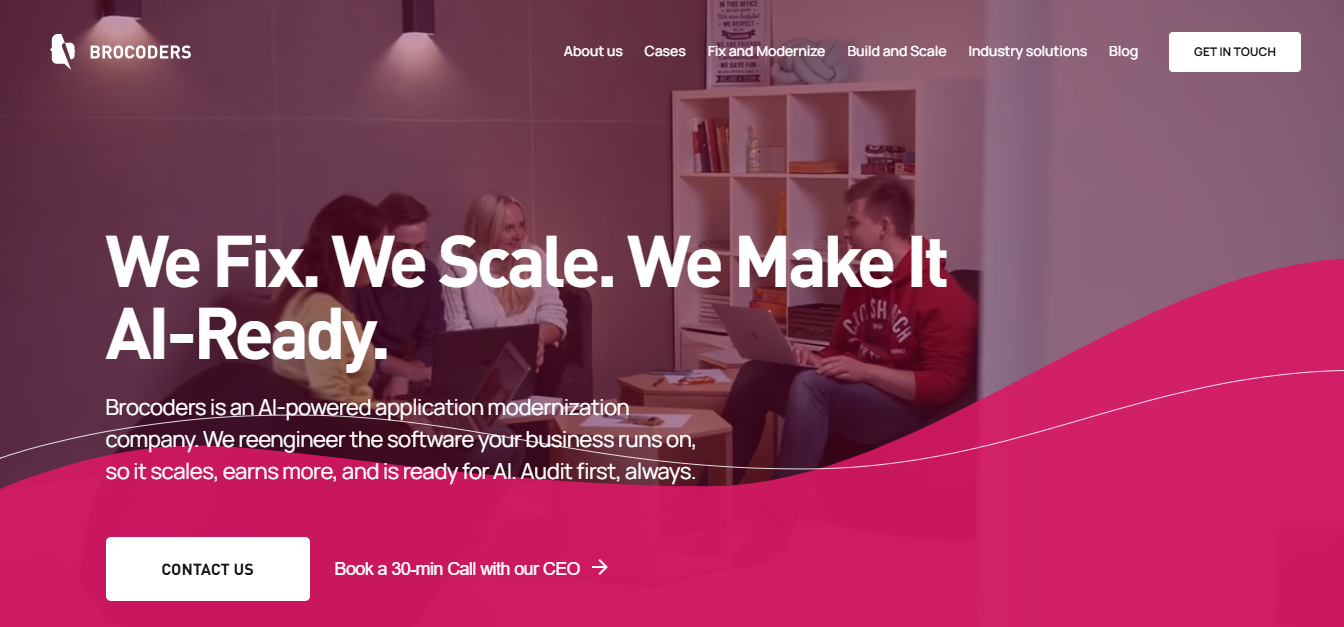
Its software product focus is relevant to founders building subscription-based services. For example, a new platform may need customer onboarding, account management, billing, and analytics. Buyers should request case studies showing how the company handled comparable functionality.
Best for: SaaS startups and growing software businesses requiring modern web application development.
Key strengths: SaaS product engineering, JavaScript technologies, startup development, and dedicated technical teams.
Potential limitations: Large enterprise engagements require confirmation of staffing capacity, security experience, and long-term operational support.
Pricing: Clutch lists $50 to $99 hourly, with a $10,000 minimum project size.
12. DevSquad
DevSquad develops custom software and SaaS applications through an iterative product engineering process. Founded in 2014, it operates from Salt Lake City, Utah. Its development approach emphasizes frequent releases, testing, and ongoing client involvement.
DevSquad offers software development, UI/UX design, web engineering, and product improvement services. Its publicly listed technical specialization includes Laravel and PHP. These technologies can support business SaaS applications, administrative systems, and subscription platforms.
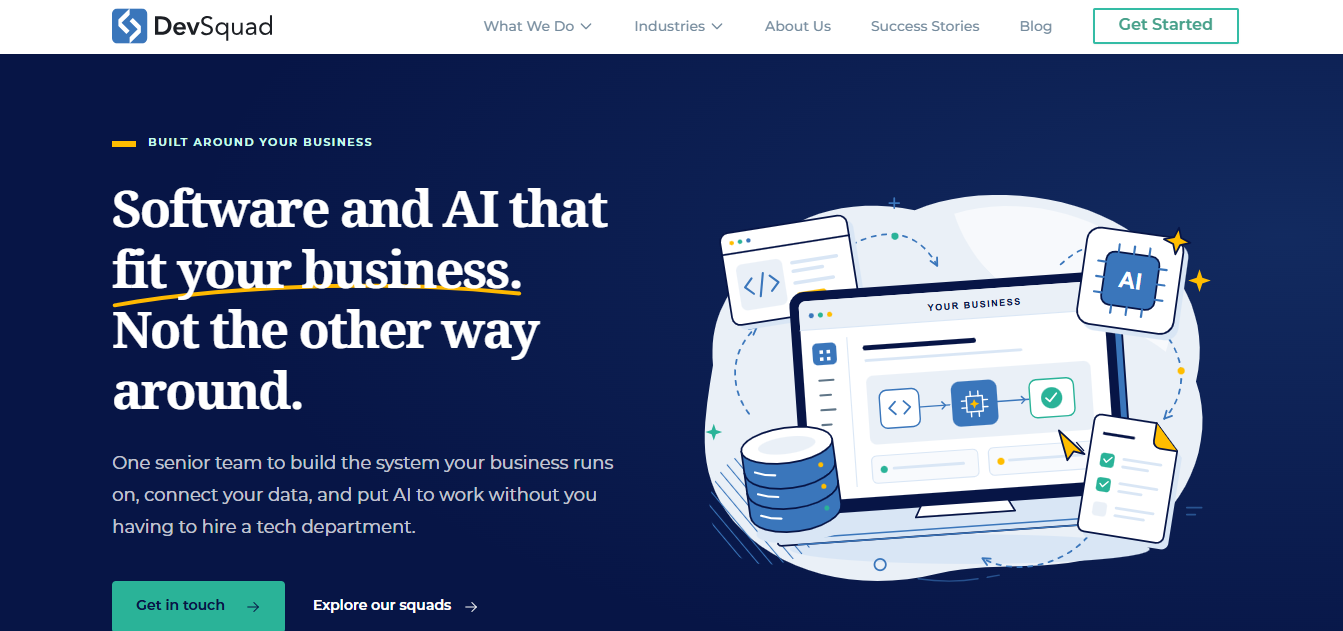
The company describes using short development cycles and pair programming for selected engineering tasks. This process can help clients review progress before a complete product is finished. However, frequent releases still require clear priorities and testing standards.
Best for: Businesses developing Laravel-based SaaS products with iterative delivery requirements.
Key strengths: Laravel expertise, software testing, product development, and regular delivery cycles.
Potential limitations: Buyers requiring another backend technology should confirm the available technical stack. Its Clutch profile also has a relatively small public review sample.
Pricing: Clutch lists $50 to $99 hourly, with a $25,000 minimum project size.
13. ELEKS
ELEKS is an international software engineering company providing enterprise applications, cloud services, and technology consulting. Founded in 1991, it is headquartered in Tallinn, Estonia. Its work includes enterprise modernization, cybersecurity, data engineering, and custom software development.
ELEKS offers product strategy, cloud infrastructure, enterprise application integration, software testing, and maintenance. These capabilities are relevant to SaaS products connected with complex business software. The company also provides consulting for organizations planning substantial technology changes.
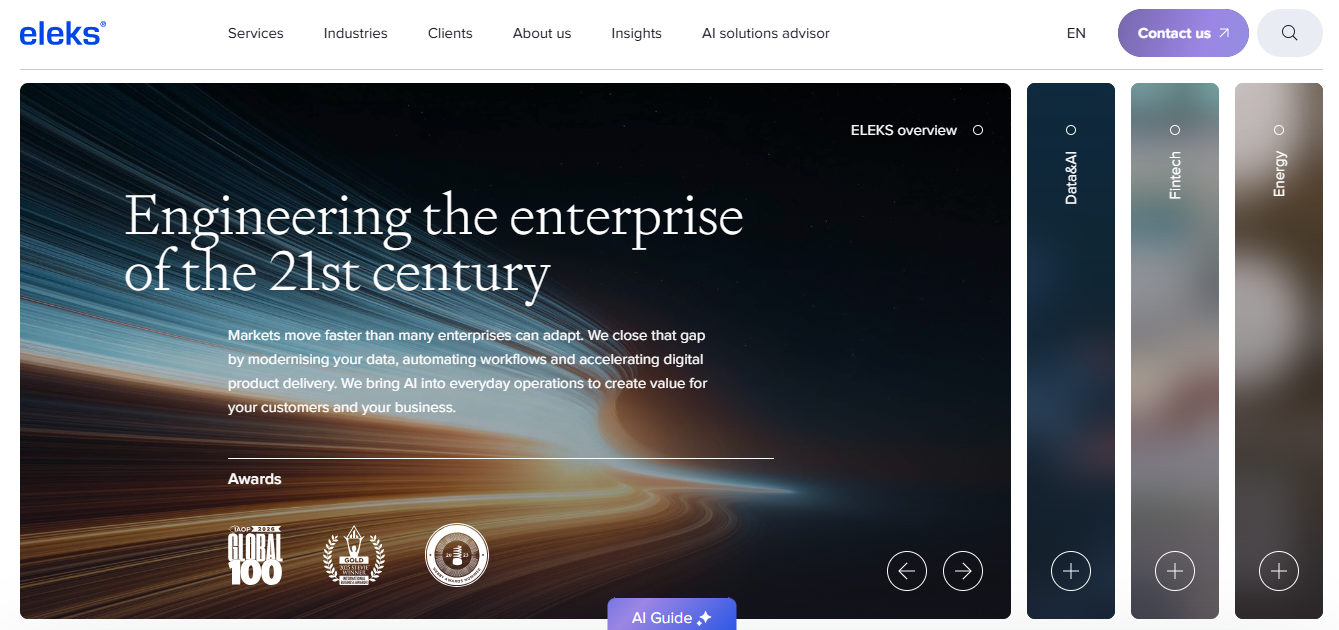
Enterprise SaaS development often requires more than building a user interface. A provider may need to connect accounting systems, manage sensitive information, and support existing business workflows. ELEKS’ broad service portfolio makes it a candidate for evaluating these requirements.
Best for: Large enterprises developing complex SaaS applications or modernizing business systems.
Key strengths: Enterprise consulting, cloud engineering, cybersecurity, and software integration.
Potential limitations: Smaller projects may not need its extensive consulting and engineering services. Buyers should confirm project staffing and support arrangements before committing.
Pricing: Clutch lists $50 to $99 hourly, with a $25,000 minimum project size.
14. Apptunix
Apptunix develops custom software, SaaS applications, mobile products, and AI-enabled business platforms. Founded in 2013, it operates from India with additional international offices. Its services cover product strategy, interface design, development, deployment, and maintenance.
Apptunix works with React, Next.js, Node.js, Python, AWS, and Azure. Its development services include cloud applications, API integration, mobile engineering, and software modernization. These capabilities support SaaS platforms requiring both customer-facing applications and administrative functionality.
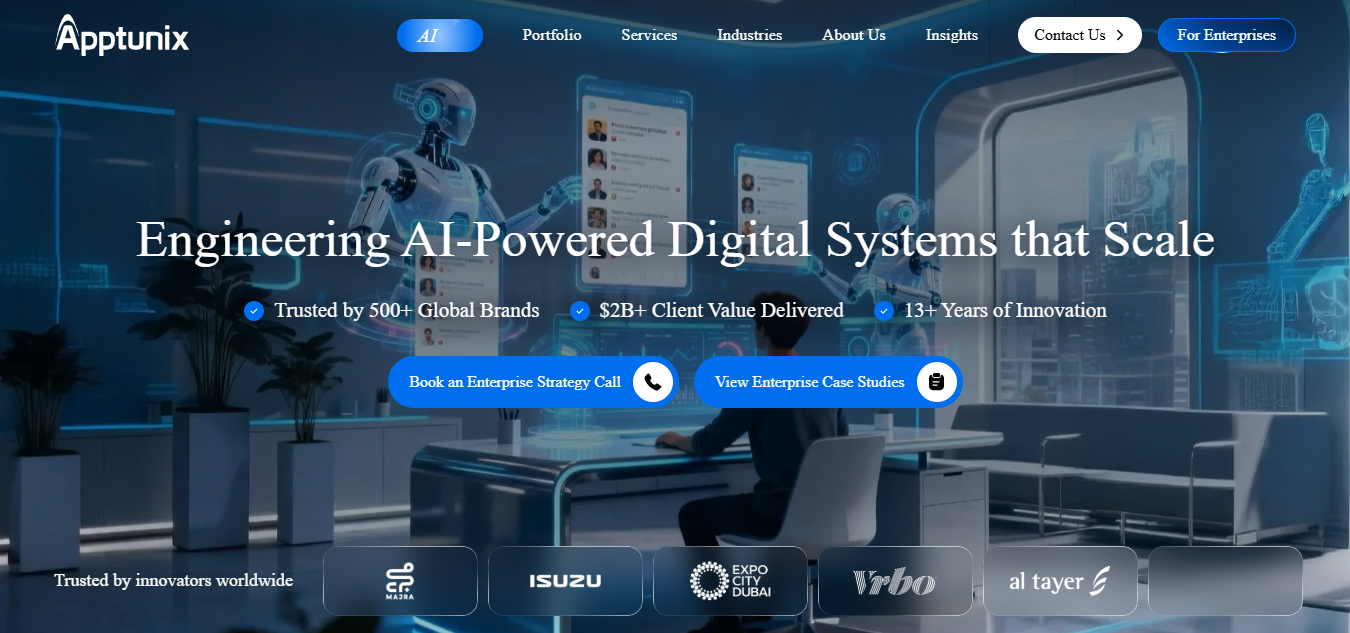
The company may suit businesses combining SaaS development with mobile product delivery. For example, a logistics platform might need customer dashboards and mobile access for delivery personnel. Such projects require careful data synchronization and permissions management.
Best for: Businesses building SaaS platforms with mobile applications, cloud integrations, or AI functionality.
Key strengths: Web and mobile engineering, cloud technologies, interface design, and application development.
Potential limitations: Some public client feedback identifies communication or timeline concerns. Buyers should establish clear milestones, reporting procedures, and approval requirements.
Pricing: Clutch lists $25 to $49 hourly and a $10,000 minimum project size.
15. Dreamix
Dreamix provides custom enterprise software development, consulting, and long-term engineering support. Founded in 2007, it operates from Sofia, Bulgaria. Its services focus on organizations building complex software products or improving existing applications.
Dreamix offers custom software development, web engineering, AI development, IT consulting, and managed services. Its work supports enterprise applications requiring integration, maintenance, and technical modernization. These capabilities can be relevant to established SaaS businesses expanding their platforms.
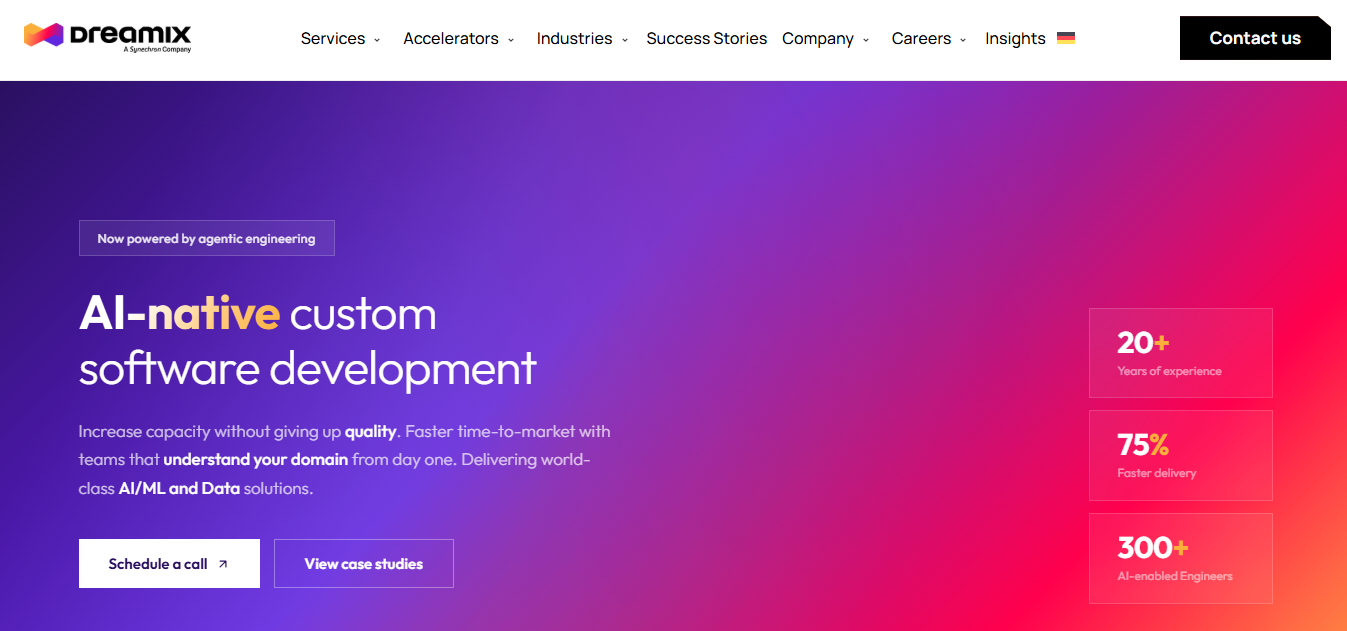
The company’s service mix suits organizations planning continued software investment. For example, an enterprise may need to modernize customer workflows while maintaining existing integrations. Such work requires careful planning to avoid disrupting users.
Best for: Enterprise SaaS development, complex business software, and long-term engineering partnerships.
Key strengths: Enterprise application development, AI services, technical consulting, and managed support.
Potential limitations: Its published $50,000 minimum project size may exclude smaller startup engagements. Buyers should confirm whether ongoing support and infrastructure management are included.
Pricing: Clutch lists $25 to $49 hourly, with a $50,000 minimum project size.
How We Selected the Top SaaS Development Companies
We selected these 15 SaaS development companies by comparing relevant services, technical capabilities, pricing, and publicly available company information. The review included engineering providers such as Simform, ScienceSoft, BairesDev, and Innowise. We focused on whether each provider could reasonably serve startups, growing SaaS businesses, or enterprises.
Our evaluation considered six important criteria:
- Relevant SaaS expertise: Experience with subscription platforms, web applications, cloud software, and product engineering.
- Technical capabilities: Services involving cloud architecture, backend development, API integrations, security, and AI.
- Public client feedback: Available reviews, project descriptions, and independent directory information.
- Industry experience: Work involving sectors such as healthcare, finance, retail, and business services.
- Pricing transparency: Published hourly rates, minimum project sizes, and engagement requirements.
- Long-term support: Availability of modernization, software maintenance, testing, and engineering assistance.
Public Clutch listings supplied much of the pricing and company background information. We also considered the services described by individual providers and their relevance to SaaS development. Companies were not contacted, independently tested, or awarded numerical performance scores during this review.
This comparison is an editorial shortlist rather than an independently verified ranking from first through fifteenth place. Company size, published rates, and client feedback may change after publication. Readers should confirm current information and request relevant case studies before making hiring decisions.
What Services Do SaaS Development Companies Offer?
SaaS development companies build, launch, maintain, and improve software applications delivered through the internet. Their services include product planning, software engineering, cloud hosting integration, testing, and maintenance. The right service depends on whether a business is launching its first product or improving an established platform.
Custom SaaS Application and Product Development
Custom SaaS development creates subscription-based software designed around a business’s specific requirements. Developers build functionality such as customer dashboards, account management, billing, and reporting. A project management SaaS product, for example, might include task tracking, user permissions, and automated reminders.
Development also involves database design, application testing, deployment, and performance monitoring. Companies must plan how customers access the system and how their information stays separated. These decisions affect the product’s reliability and future expansion.
SaaS MVP Development for Startups
SaaS MVP development creates a basic working product that customers can test before further investment. MVP stands for minimum viable product, meaning software containing the features needed to validate an idea. A startup might begin with account registration, payment processing, and one main customer workflow.
Providers such as UpsilonIT, SolveIt, and DevSquad offer services relevant to early product development. The initial release helps founders identify missing functionality through real user feedback. Additional capabilities can then be prioritized using customer demand rather than assumptions.
Enterprise SaaS and Cloud Development
Enterprise SaaS development supports applications with complex operations, security requirements, and larger user populations. Companies such as ScienceSoft, ELEKS, and Intellectsoft provide relevant enterprise engineering services. Their work may involve cloud migration, internal software integration, and access management.
Cloud platforms such as AWS, Microsoft Azure, and Google Cloud provide infrastructure for hosting applications. Developers also configure monitoring, backups, and procedures for recovering from service interruptions. Enterprise buyers should confirm how these responsibilities are divided between the agency and client.
SaaS Migration, API Integration, and Maintenance
SaaS migration moves existing applications onto newer software architecture or cloud infrastructure. API integration connects separate services so they can exchange information automatically. For example, Stripe can handle subscription payments while Salesforce stores customer relationship information.
Maintenance includes security updates, bug fixes, database improvements, and infrastructure monitoring. These activities continue after the initial product launch. Buyers should clarify which maintenance services are included in their development agreement.
AI-Powered SaaS Development
AI-powered SaaS development adds capabilities such as intelligent search, document analysis, and automated customer support. Companies such as Tezeract, Simform, and Innowise offer relevant AI engineering services. These features can improve specific workflows when supported by reliable information and suitable testing.
Businesses should examine data privacy, model accuracy, and operating costs before adding AI functionality. For example, an AI support assistant may require paid model access and ongoing response monitoring. A development partner should explain these requirements instead of treating AI as a guaranteed improvement.
How Much Does It Cost to Hire a SaaS Development Company?
Hiring a SaaS development company can require a budget ranging from several thousand dollars to hundreds of thousands. The actual amount depends on product requirements, staffing, integrations, and development duration. Published hourly rates provide a starting point, but they don’t establish the final cost of a SaaS application.
SaaS Development Hourly Rates and Pricing Models
The 15 companies in this comparison publish hourly rate bands ranging from $25 to $99 on Clutch. For example, Simform lists $25 to $49 hourly, while ScienceSoft lists $50 to $99. These figures represent advertised directory ranges rather than negotiated quotes.
Three common pricing arrangements are hourly billing, fixed-price contracts, and dedicated development teams. Hourly billing supports changing requirements, while fixed-price contracts work best with clearly defined deliverables. Dedicated teams suit businesses requiring ongoing development capacity over several months.
A 1,000-hour engagement at $50 hourly would produce $50,000 in labor charges. That example excludes hosting, software licenses, and other expenses outside the development agreement. Buyers should compare complete quotations rather than individual hourly rates.
SaaS MVP vs. Full Product Development Costs
A SaaS MVP generally costs less than a complete product because its initial feature scope is smaller. The following budgets are illustrative planning scenarios, not verified industry averages. Actual agency proposals may fall above or below these ranges.
| Project Type | Illustrative Development Budget | Typical Scope |
| Basic SaaS MVP | $15,000 to $40,000 | Core workflow, registration, basic billing |
| Custom SaaS application | $40,000 to $100,000 | Customer dashboard, integrations, reporting |
| Complex enterprise SaaS | $100,000 to $250,000 or more | Advanced security, integrations, custom architecture |
A basic MVP might launch with one subscription plan and limited administrative functionality. A larger SaaS platform could require analytics, multiple customer roles, and integration with existing business software. Enterprises may also need extensive testing, documentation, and security reviews.
Factors That Affect SaaS Development Costs
SaaS development costs depend mainly on feature complexity, engineering time, architecture, and integration requirements. A simple customer portal usually requires less work than software connecting multiple financial systems. Custom reporting and advanced permissions also increase development effort.
The technology stack and number of assigned developers can affect the overall budget. Cloud hosting, security monitoring, paid APIs, and maintenance introduce recurring expenses after launch. Businesses should request separate estimates for initial development and ongoing operations.
How to Choose the Best SaaS Development Company
Choose a SaaS development company by comparing relevant experience, technical expertise, delivery processes, pricing, and long-term support. Start with a written description of your product, target customers, required features, and budget. Then request proposals from at least three providers that match those requirements.
Review SaaS Experience, Portfolios, and Client Feedback
Review past SaaS projects that resemble the software you want to build. A company developing a healthcare platform should demonstrate experience handling sensitive information and user access. A startup building subscription software should look for examples involving billing, customer onboarding, and product growth.
Ask potential partners to explain what their teams actually delivered in each example. A company may have designed an interface without building the application’s backend or infrastructure. Client reviews on Clutch can provide additional context, but they shouldn’t replace project-specific evidence.
Evaluate Technical Expertise, Security, and Scalability
A suitable SaaS development company should understand application architecture, customer data protection, and expected product growth. Ask which technologies it recommends and why those choices fit your application. Common examples include React for interfaces, PostgreSQL for databases, and AWS for cloud infrastructure.
Multi-tenant architecture allows separate customers to use shared software while keeping their information isolated. If your business needs this model, ask how the agency will implement access restrictions and data separation. Request explanations covering testing, backups, system monitoring, and recovery from technical failures.
Security deserves particular attention because a SaaS provider may handle sensitive customer information. IBM’s 2025 Cost of a Data Breach Report found an average global breach cost of $4.44 million. That figure covers studied organizations across industries and is not a SaaS-specific average.
Compare Pricing, Communication, and Project Timelines
Compare written proposals using the same scope, expected deliverables, and project requirements. A low hourly rate may produce a higher total cost if development takes longer. Ask each agency to explain its estimated development hours and staffing assumptions.
Discuss how progress will be reported throughout the engagement. Weekly demonstrations, milestone reviews, and shared issue tracking can make delays easier to identify. Confirm who approves changes and how additional work affects the budget.
Timelines should include product discovery, design, engineering, testing, and deployment. A rushed schedule may leave insufficient time for security checks or user testing. Ask the development partner to identify dependencies that could delay delivery.
Check Code Ownership, Contracts, and Post-Launch Support
A SaaS development contract should define deliverables, payment terms, intellectual property ownership, and maintenance responsibilities. Confirm who will control the source code repository, cloud accounts, and product documentation. These details matter if you later change development partners.
Ask how third-party licenses and reusable software components will be handled. The agreement should explain what happens when milestones are missed or the project ends early. Legal review may be appropriate for high-value or sensitive software development contracts.
Post-launch support should include clear expectations for monitoring, bug fixes, and security updates. Some agencies provide dedicated maintenance agreements, while others charge separately for ongoing engineering. Confirm response times and handover procedures before making your decision.
Which SaaS Development Company Is Right for Your Project?
The right SaaS development company depends on your budget, product stage, technical requirements, and expected customer growth. A startup validating one feature needs a different approach from an enterprise replacing a complex platform. Matching those requirements to proven agency capabilities helps narrow the shortlist.
Best for Startups and SaaS MVP Development
UpsilonIT, SolveIt, DevSquad, and Brocoders are relevant candidates for startup SaaS development. UpsilonIT emphasizes MVP engineering, while SolveIt combines product discovery with application development. DevSquad focuses on iterative software delivery, and Brocoders offers SaaS product engineering.
Budget differences matter because these companies have different published minimum project sizes. SolveIt and Brocoders list $10,000 minimums, while UpsilonIT and DevSquad list $25,000. Founders should compare the proposed MVP scope rather than assuming the lowest minimum produces the cheapest finished product.
Best for Enterprise and B2B SaaS Applications
ScienceSoft, ELEKS, Intellectsoft, and Innowise are candidates for enterprise SaaS projects. ScienceSoft emphasizes security and regulated industries, while ELEKS offers enterprise engineering and consulting. Intellectsoft focuses on business software modernization, and Innowise provides broad technical capacity.
Enterprise buyers should examine architecture, system integration, compliance requirements, and maintenance support. Ask for project examples involving similar user volumes and business processes. The selected company should demonstrate relevant experience rather than relying on its overall size.
Best for AI-Powered SaaS and Cloud Modernization
Tezeract, Simform, and Innowise are relevant options for AI-enabled SaaS development and cloud engineering. Tezeract specializes in AI functionality, while Simform emphasizes cloud and product engineering. Innowise combines custom software services with cloud, data, and AI development.
The choice depends on whether your main requirement is AI functionality, infrastructure modernization, or both. Request examples showing how each company handles data quality, security, testing, and ongoing operating costs. Compare the proposed implementation against your business requirements before hiring.
Common Mistakes to Avoid When Hiring SaaS Development Companies
Common SaaS hiring mistakes include choosing solely on price, overlooking relevant experience, and signing unclear development contracts. These mistakes can increase costs, delay delivery, and complicate future product maintenance. A structured evaluation helps businesses avoid unnecessary risks.
Consider these seven issues before selecting a development partner:
- Choosing only by hourly rate: Compare the full project scope, estimated hours, deliverables, and support costs.
- Ignoring SaaS architecture: Verify experience with customer accounts, subscription billing, data isolation, and cloud infrastructure.
- Skipping portfolio checks: Request relevant case studies and ask what the company actually delivered.
- Overlooking security: Review data protection, access permissions, backups, and applicable compliance requirements.
- Accepting unclear contracts: Define ownership, payments, milestones, testing responsibilities, and termination conditions.
- Ignoring ongoing maintenance: Budget for security updates, infrastructure monitoring, bug fixes, and future improvements.
- Forgetting vendor handover: Confirm access to repositories, documentation, deployment procedures, and cloud accounts.
Requesting comparable proposals from three shortlisted companies is a practical way to reduce hiring uncertainty. Use the same feature list and technical requirements when requesting each estimate. This makes differences in pricing, delivery approaches, and project assumptions easier to identify.
Frequently Asked Questions About SaaS Development Companies
What Is a SaaS Development Company?
A SaaS development company builds and maintains software that customers access through the internet. Its services may include product design, subscription billing, cloud hosting integration, and application maintenance. Businesses hire these companies to create new software products or modernize existing applications.
How Long Does It Take to Build a SaaS Application?
A basic SaaS MVP might take three to six months, depending on its scope and development team. More complex products can require significantly longer delivery schedules. Architecture, integrations, testing, and changing requirements all affect the timeline.
Is It Better to Hire a SaaS Development Company or Freelancers?
A SaaS development company generally offers broader coordinated services, while freelancers provide individual technical expertise. Agencies may include project management, design, engineering, and testing under one agreement. Freelancers can suit smaller assignments when the business already has technical leadership.
Can SaaS Development Companies Modernize Existing Applications?
Yes, SaaS development companies can modernize existing software through cloud migration, architecture changes, and application upgrades. Some providers also improve databases, replace outdated interfaces, and integrate new services. The right approach depends on the application’s current condition and business requirements.
What Should a SaaS Development Contract Include?
A SaaS development contract should define project scope, payment terms, intellectual property ownership, and delivery responsibilities. It should also address security, testing, change requests, and termination procedures. Buyers should clarify source code access and support arrangements before signing.
Do SaaS Development Companies Provide Ongoing Maintenance?
Many SaaS development companies provide maintenance, but the scope and pricing vary by provider. Support may include bug fixes, security patches, infrastructure monitoring, and feature improvements. Always confirm whether these services are included or require a separate agreement.
Final Thoughts: Choosing the Right SaaS Development Partner
The best SaaS development company is the one whose experience, services, and pricing match your project. Simform, ScienceSoft, UpsilonIT, and the other providers offer different technical strengths and engagement requirements. Choosing between them requires more than comparing hourly rates.
Start by shortlisting three companies with relevant SaaS experience and suitable minimum budgets. Ask each provider for comparable case studies, a detailed proposal, and clear ownership terms. A careful comparison now can help you build a product that’s easier to launch, maintain, and grow.