
Posting jobs but still struggling to find qualified candidates? You spend hours reviewing applications, but few candidates match your requirements. Delayed hiring can leave important positions open and put extra pressure on your team.
The top recruiting platforms help businesses find candidates, manage applications, and simplify hiring. But not every platform offers the same features, pricing, or value. Choosing the wrong one can waste your budget and slow down recruitment.
We’ve compared 15 recruiting platforms to help you find the right fit. You’ll explore their features, pricing, benefits, and limitations for different hiring needs. Whether you’re hiring for a startup or managing a larger team, this guide makes comparisons easier.
Top Recruiting Platforms
The top recruiting platforms in 2026 include Greenhouse, Workable, Manatal, LinkedIn Recruiter, and Indeed. Each serves a different hiring purpose, from job advertising to complete recruitment management. The comparison below helps you identify suitable software before exploring the detailed reviews.
According to SHRM’s 2025 Talent Trends report, 69% of surveyed organizations reported difficulty filling full time positions. Recruiting software can help employers organize applications, improve communication, and reduce administrative work. However, the right platform depends on your hiring volume, budget, and recruitment requirements.
| Recruiting platform | Best for | Pricing approach |
| Greenhouse | Structured hiring | Custom quote |
| Workable | Growing businesses | From $299/month |
| Manatal | Affordable AI recruiting | From $15/user/month |
| LinkedIn Recruiter | Candidate sourcing | Subscription or quote |
| Indeed | Job advertising | Free eligible listings, paid sponsorship |
| Zoho Recruit | Custom workflows | Free; paid from $25/user/month |
| Lever | ATS and recruitment CRM | Custom quote |
| Ashby | Recruitment analytics | From $400/month |
| JazzHR | Small business hiring | From $1,000/year |
| Breezy HR | Simple applicant tracking | Free; paid from $157/month |
| SmartRecruiters | Enterprise hiring | Custom quote |
| iCIMS | Large enterprise recruitment | Custom quote |
| Bullhorn | Staffing agencies | Custom quote |
| ZipRecruiter | Job distribution | Paid advertising plans |
| Loxo | AI talent sourcing | Plan based pricing |
15 Best Recruiting Platforms in 2026
The 15 best recruiting platforms for different hiring needs include ATS software, job boards, recruitment CRMs, and sourcing tools. Some products, including Greenhouse and Ashby, focus on managing recruitment workflows. Others, including LinkedIn Recruiter and Indeed, concentrate on finding or attracting candidates.
1. Greenhouse: Best for Structured Hiring
Greenhouse is a recruiting platform designed for consistent, structured hiring. It helps employers manage applications, coordinate interviews, and evaluate candidates using established criteria. Companies with several hiring managers can follow the same recruitment process across departments.
Greenhouse includes interview scorecards, scheduling, candidate relationship management, and recruitment reporting. Its structured interview kits help teams assess applicants against job requirements rather than relying on informal impressions. The platform also supports integrations with HR software and other recruitment services.
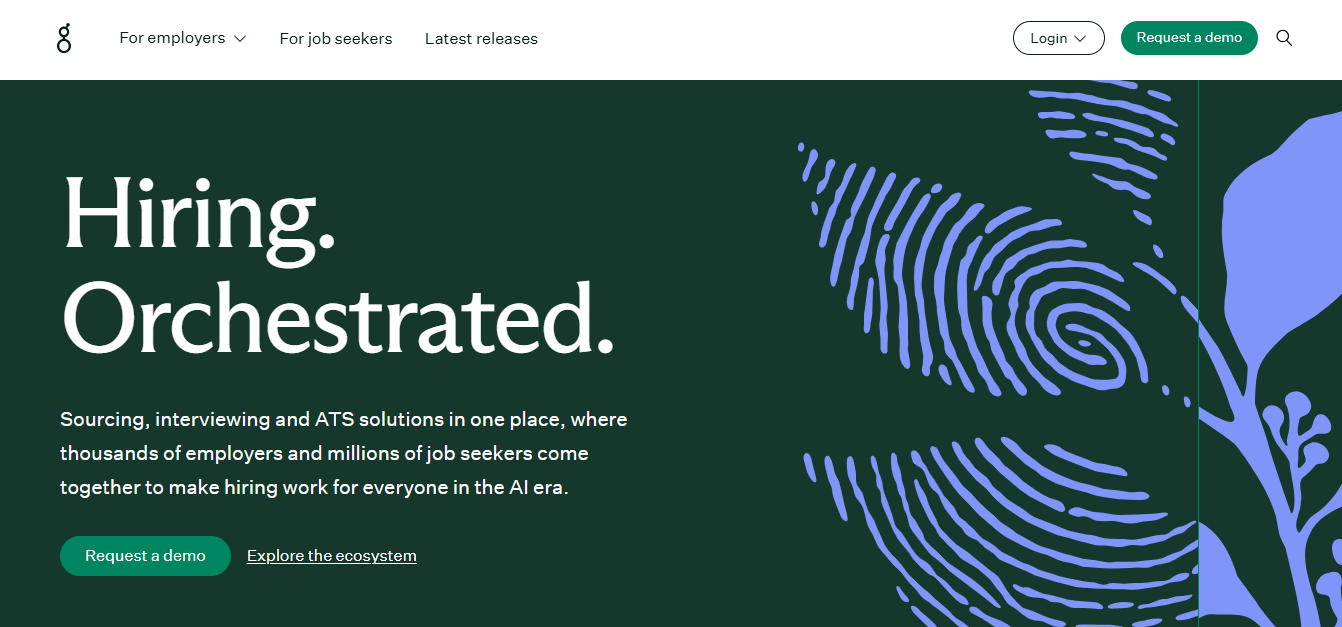
Greenhouse offers Core, Plus, and Pro plans, with pricing available through sales consultations. Its main advantage is consistent candidate evaluation, while custom pricing and configuration requirements can complicate purchasing. It suits organizations that prioritize process control, collaborative hiring, and documented recruitment decisions.
2. Workable: Best for Small and Growing Businesses
Workable combines candidate sourcing, applicant tracking, and recruitment automation in one platform. It helps growing companies manage vacancies without building a complicated recruitment system. Employers can track applicants, schedule interviews, and coordinate hiring through a central dashboard.
Workable distributes vacancies across more than 200 job boards and offers access to candidate sourcing functions. Its recruiting suite also includes communication tools, reporting, and configurable hiring workflows. Additional HR capabilities support onboarding and employee information management.
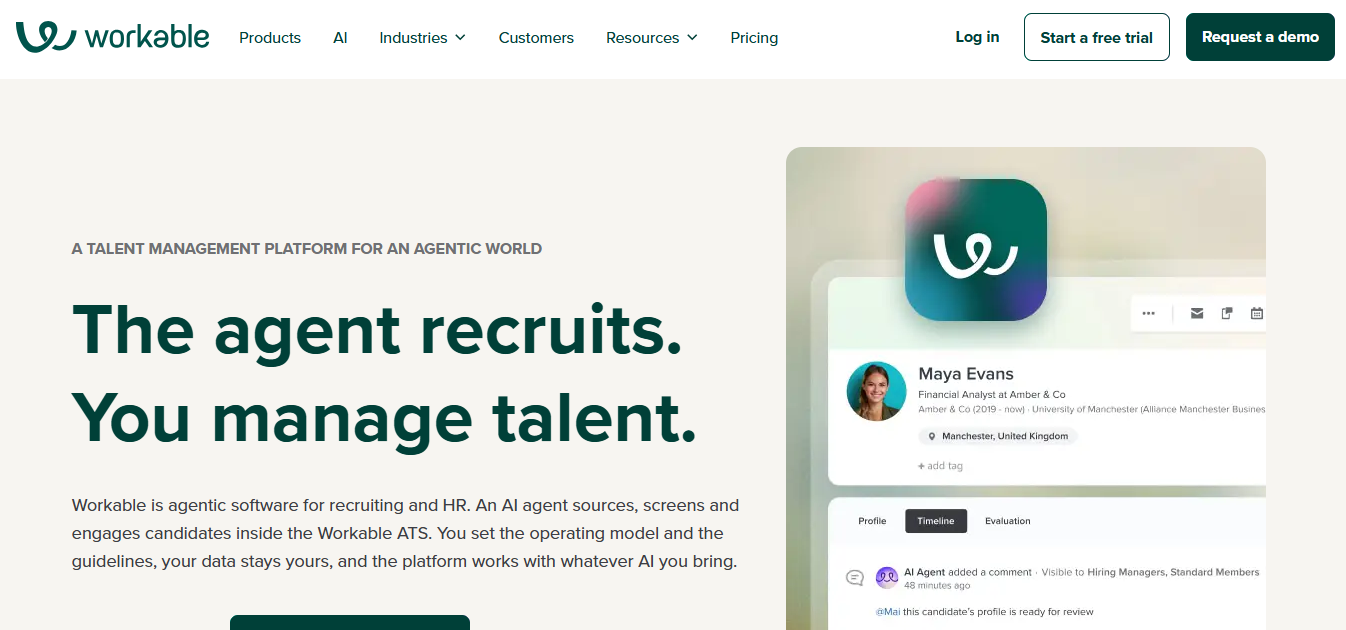
Workable Standard starts at $299 monthly, or $3,588 annually, for organizations with 1 to 20 employees. Video interviews, assessments, and selected AI capabilities can increase costs. Workable suits growing teams needing broad recruitment functionality, although its pricing rises with organizational size.
3. Manatal: Best for Affordable AI Recruiting
Manatal is an AI powered recruiting platform combining applicant tracking and recruitment CRM functionality. It helps recruiters organize candidates, manage vacancies, and identify potentially relevant applicants. The platform serves both internal HR departments and staffing agencies.
Manatal provides AI candidate recommendations, customizable hiring pipelines, candidate records, and job posting functionality. Its recruitment CRM helps agencies manage client relationships alongside their applicant database. Automation and advanced reporting are available through higher subscription plans.
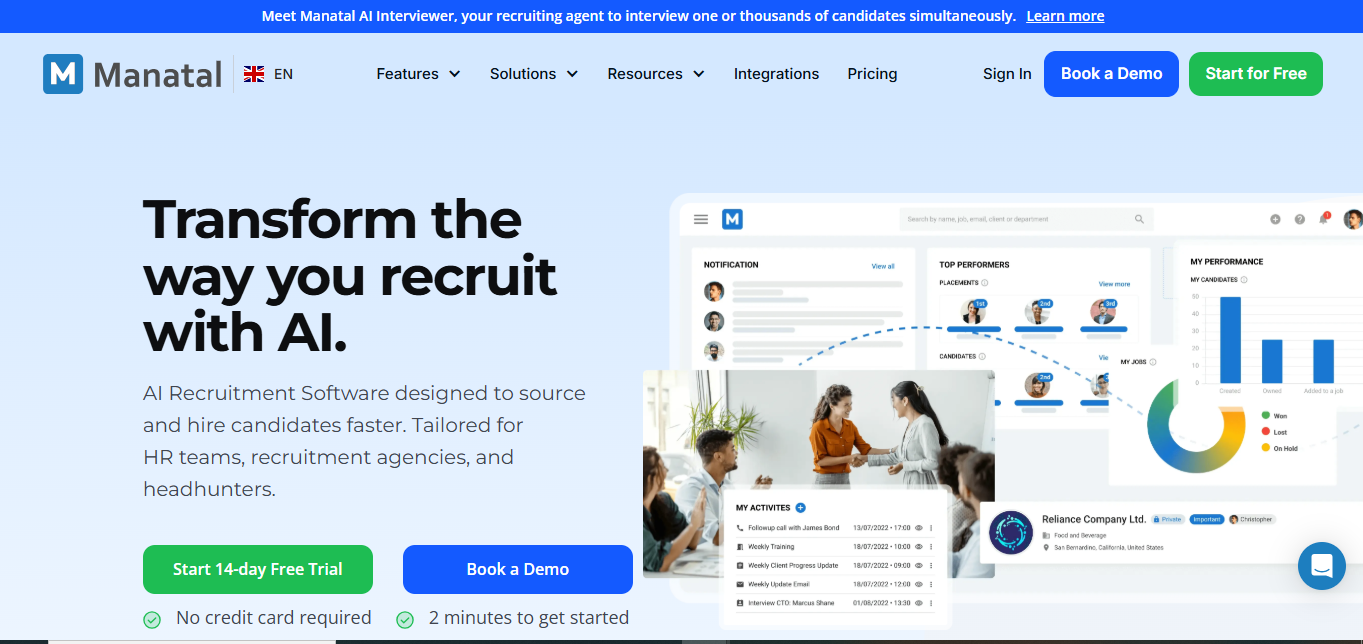
The Professional plan costs $15 per user monthly with annual billing, including up to 15 jobs per account. Enterprise costs $35 per user monthly under annual billing and adds workflow automation. Manatal suits cost conscious recruiters, but AI matching still requires human assessment and paid upgrades.
4. LinkedIn Recruiter: Best for Candidate Sourcing
LinkedIn Recruiter helps employers find and contact professionals through LinkedIn’s professional network. It focuses on proactive sourcing rather than managing every stage of recruitment. Recruiters can approach potential candidates even when those individuals haven’t applied for a vacancy.
The platform offers advanced search filters, talent recommendations, and direct messaging through InMail. Search criteria include experience, skills, job titles, and professional background. Full Recruiter also supports collaboration and applicant tracking integrations.
Recruiter Lite includes 30 monthly InMail credits, while full Recruiter includes 150 per license. Subscription pricing varies according to product and purchasing arrangements, so employers should confirm current costs. LinkedIn Recruiter suits targeted professional hiring, but a separate ATS may still be necessary.
5. Indeed: Best for Job Posting and Applicant Reach
Indeed helps employers attract applicants through searchable job listings and sponsored advertisements. Businesses can publish eligible vacancies, receive applications, and communicate with interested candidates. Its main purpose is candidate attraction rather than complete enterprise recruitment management.
Indeed provides job advertisements, applicant screening questions, and employer account tools. Sponsored listings can increase visibility when employers need additional reach. Businesses can monitor candidate responses and adjust advertising spending according to recruitment requirements.
Indeed offers free job postings, although eligibility and monthly limits vary by country. In 12 specified countries, employers can post up to three free direct listings monthly. Indeed suits vacancy advertising, but sponsored spending and application quality require ongoing monitoring.
6. Zoho Recruit: Best for Customizable Recruitment Workflows
Zoho Recruit provides customizable applicant tracking for corporate hiring teams and recruitment agencies. Employers can configure candidate pipelines according to their internal hiring process. The platform combines applicant records, interview coordination, and recruitment workflow management.
Zoho Recruit includes candidate sourcing, resume management, branded career pages, and reporting capabilities. It connects with other Zoho products and external business applications. Higher subscription tiers introduce AI candidate matching, advanced automation, and additional customization.
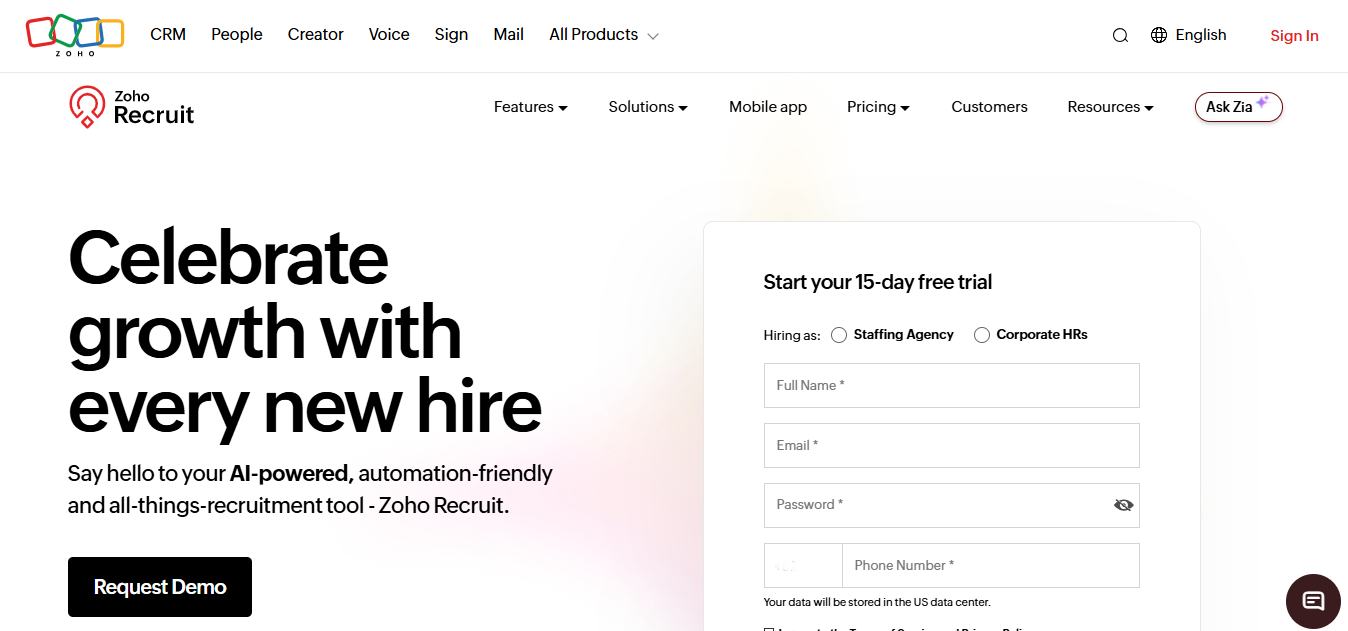
Zoho Recruit offers a free edition with one active job per recruiter license. Its corporate Standard plan starts at $25 per recruiter monthly with annual billing. It suits businesses seeking flexible recruitment software, although advanced functionality requires higher plans.
7. Lever: Best for Applicant Tracking and Candidate Relationships
Lever combines applicant tracking and candidate relationship management in one recruiting platform. Its approach supports both current recruitment and ongoing communication with potential future hires. Employers can maintain talent pipelines instead of restarting sourcing whenever a vacancy opens.
Lever includes candidate records, recruitment reporting, interview coordination, and built in CRM functionality. Recruiters can organize outreach and track engagement throughout the hiring process. Its reporting dashboards help teams review pipeline activity and recruitment performance.
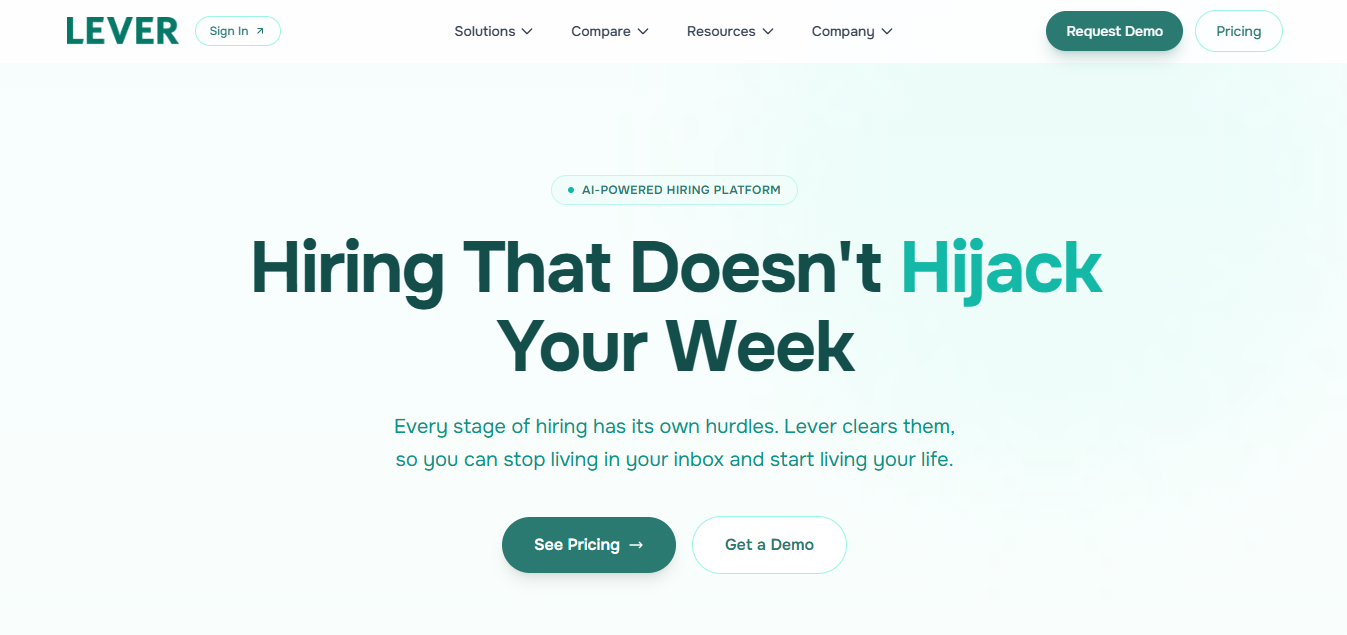
Lever uses customized pricing based on organizational size and hiring requirements. Its integrated ATS and CRM can reduce the need for separate candidate relationship software. However, buyers must request a quote and assess implementation requirements before committing.
8. Ashby: Best for Recruitment Analytics
Ashby is a recruiting platform combining applicant tracking, sourcing, scheduling, and detailed hiring analytics. It helps recruitment teams monitor activity throughout the hiring process. Companies can use its reporting capabilities to identify delays and evaluate candidate sourcing performance.
Ashby provides configurable dashboards, interview scheduling, and candidate relationship management. Recruiters can measure time to hire, application conversion, and hiring pipeline activity. Its integrated features reduce the need to transfer recruitment data between separate reporting applications.
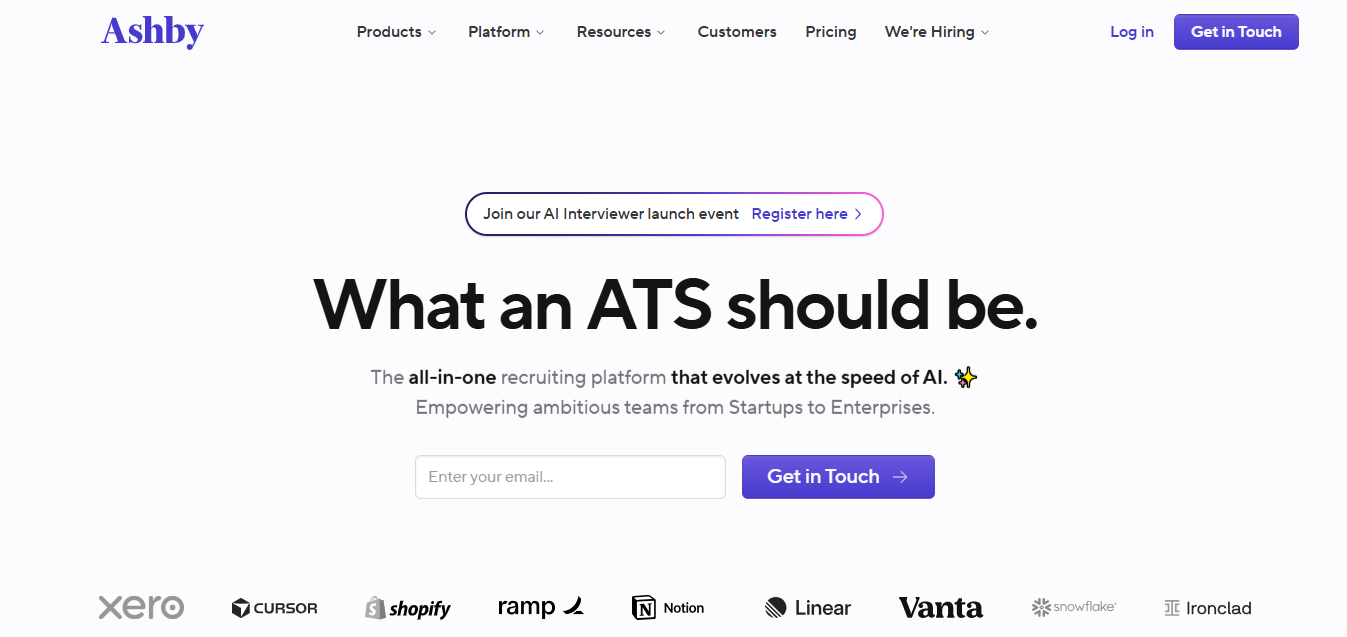
Ashby’s Foundations plan starts at $400 monthly for companies with up to 100 employees. Larger organizations receive pricing based on their size, usage, and service requirements. Ashby suits data focused hiring teams, although its starting price may exceed smaller recruitment budgets.
9. JazzHR: Best for Small Business Hiring
JazzHR offers applicant tracking software for small businesses that need organized hiring without complex enterprise systems. It helps employers advertise vacancies, review applicants, and coordinate interviews. Its hiring workflows support collaboration between business owners and recruitment staff.
JazzHR includes applicant tracking, email templates, screening questions, and interview evaluation features. Higher plans add AI candidate matching, structured assessments, and advanced reporting. Employers can also connect JazzHR with LinkedIn Recruiter and other supported recruitment services.
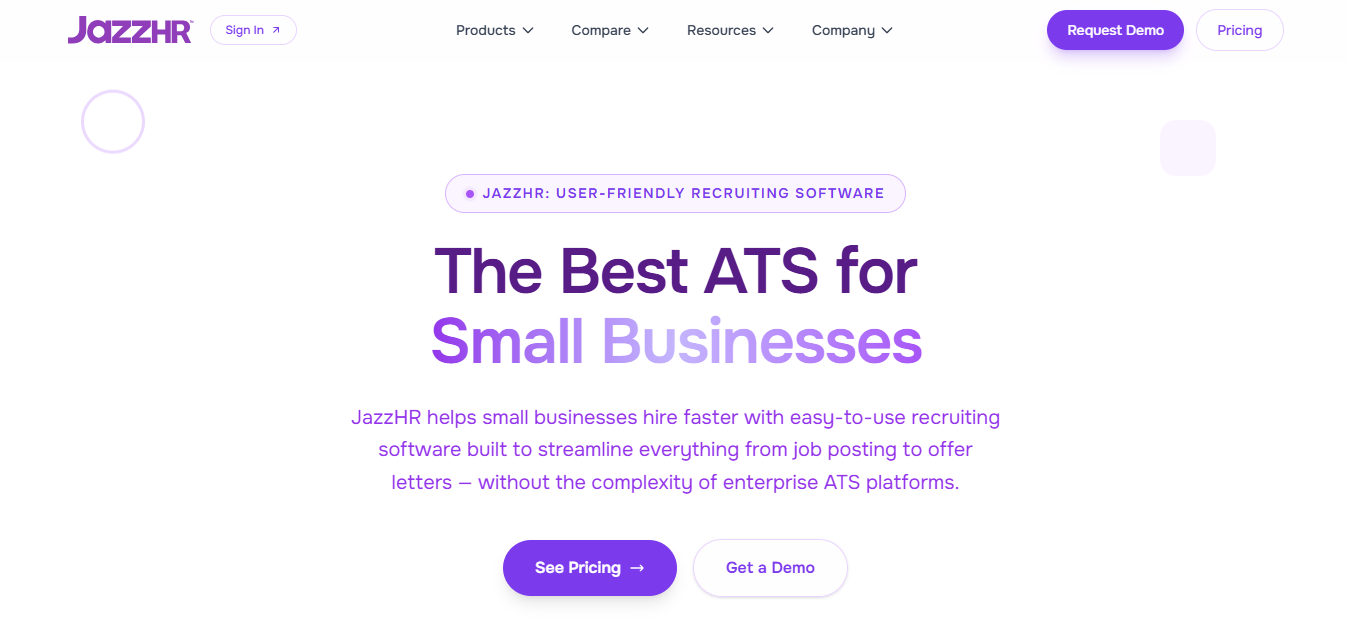
JazzHR’s Hero plan costs $1,000 annually, while Plus costs $3,480 annually. The entry plan includes limited job posting capacity, and additional functionality requires higher subscriptions. JazzHR suits small employers prioritizing dedicated applicant tracking over advanced sourcing technology.
10. Breezy HR: Best for Simple Applicant Tracking
Breezy HR helps businesses manage recruitment through visual applicant tracking pipelines. Its dashboard shows where candidates stand in the hiring process. Employers can move applicants through screening, interviews, evaluations, and final decisions.
Breezy HR offers career pages, application questionnaires, interview scheduling, and candidate communication. Paid plans include broader automation, additional job capacity, and recruitment collaboration capabilities. Its visual approach helps hiring managers review candidate progress without navigating complicated reports.
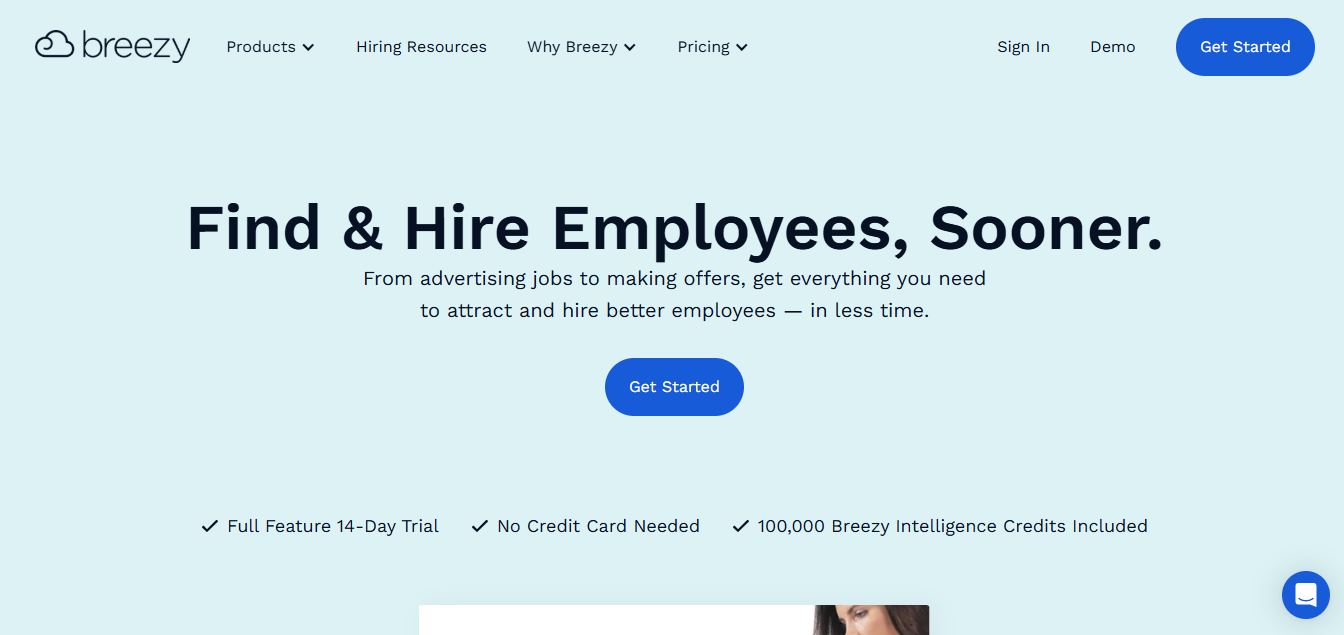
Breezy HR offers a free Bootstrap plan with one active position or candidate pool. The paid Startup plan begins at $157 monthly under annual pricing. However, the free edition limits recent candidate data access and advanced workflow functionality.
11. SmartRecruiters: Best for Enterprise Talent Acquisition
SmartRecruiters provides enterprise recruiting software for organizations managing hiring across departments and business locations. It supports recruitment coordination through centralized applicant records and configurable hiring processes. Large organizations can use it to standardize recruitment activity while accommodating departmental requirements.
The platform supports job advertising, applicant tracking, candidate communication, and recruitment analytics. Enterprise functionality includes workflow configuration and connections with other HR systems. Its talent acquisition approach supports organizations managing both specialist recruitment and broader workforce hiring.
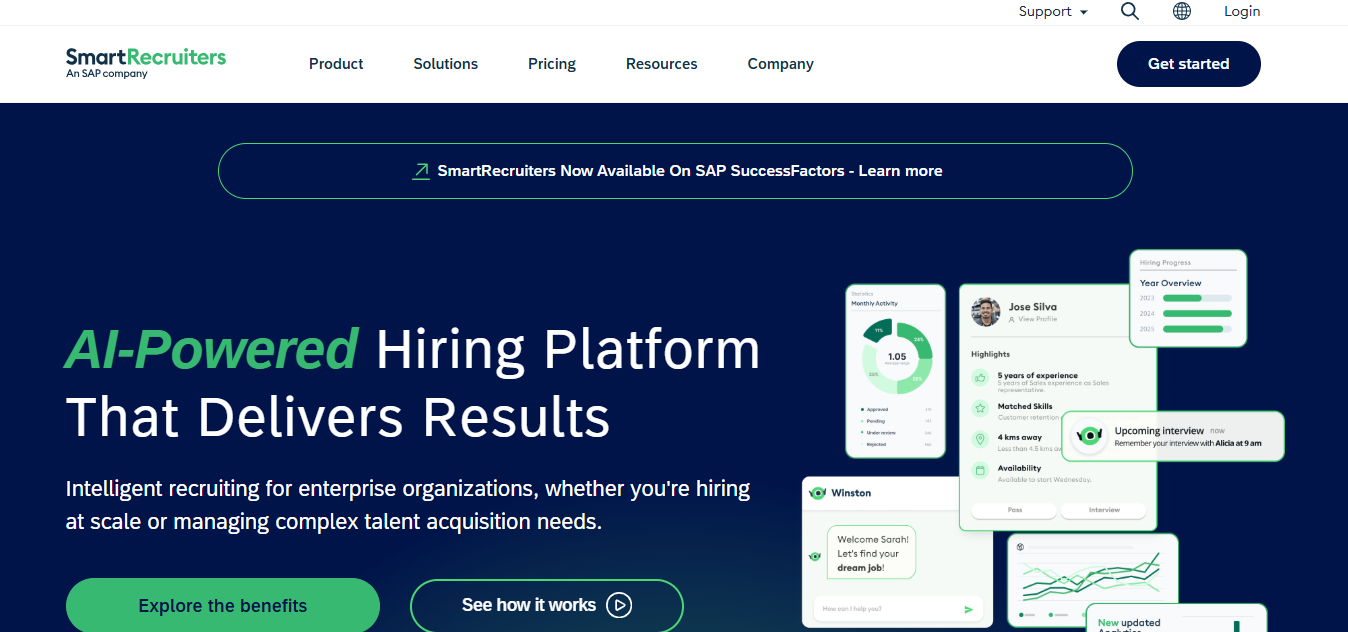
SmartRecruiters uses customized enterprise pricing rather than a universal published subscription rate. Its main benefit is supporting coordinated recruitment across complex organizations. However, smaller employers should evaluate implementation requirements and costs before selecting it.
12. iCIMS: Best for Large Enterprise Recruitment
iCIMS provides enterprise talent acquisition software for companies handling complex, large scale recruitment. Its products support applicant tracking, candidate communication, onboarding, and employer branding. Organizations can configure recruitment processes to meet different departmental or regional requirements.
iCIMS Hire includes job posting, automated candidate suggestions, interview coordination, and approval workflows. Additional products support candidate relationship management and recruitment marketing. Its platform also connects with numerous HR applications and related hiring services.
iCIMS provides customized pricing based on product selection and organizational requirements. Its extensive configuration and integration capabilities support complex recruitment operations. However, implementation planning and additional modules can increase the total investment.
13. Bullhorn: Best for Staffing and Recruiting Agencies
Bullhorn combines applicant tracking and client relationship management for staffing and recruitment agencies. Unlike internal hiring software, it manages relationships between candidates, recruiters, and employer clients. Agencies can use Bullhorn to coordinate job orders, candidate submissions, and placements.
Bullhorn provides recruitment CRM, AI candidate matching, communication management, and workflow automation. Its platform also supports client information and recruitment activity reporting. This combination helps agencies manage business development alongside candidate sourcing and placement activity.
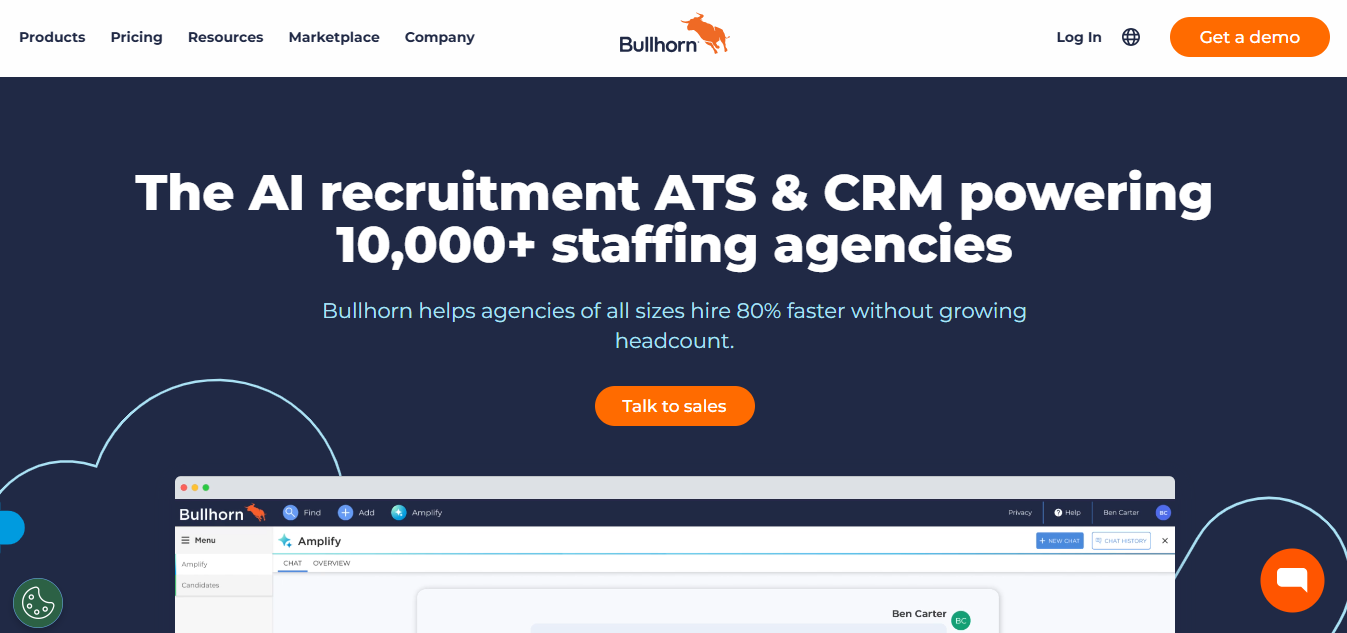
Bullhorn offers agency focused pricing arrangements, including packages for smaller staffing businesses. Its specialized functionality suits recruitment agencies handling multiple client accounts. However, employers hiring only internal staff may find its agency management capabilities unnecessary.
14. ZipRecruiter: Best for Job Distribution and Candidate Matching
ZipRecruiter helps employers advertise vacancies and connect with candidates through job distribution and matching technology. It primarily supports candidate attraction rather than complete enterprise hiring management. Businesses can use it to publish job advertisements and review applicant responses.
ZipRecruiter provides job posting, candidate recommendations, and employer dashboards. Its matching functionality identifies potential applicants based on job requirements and available candidate information. Employers can then review profiles and communicate with suitable individuals.
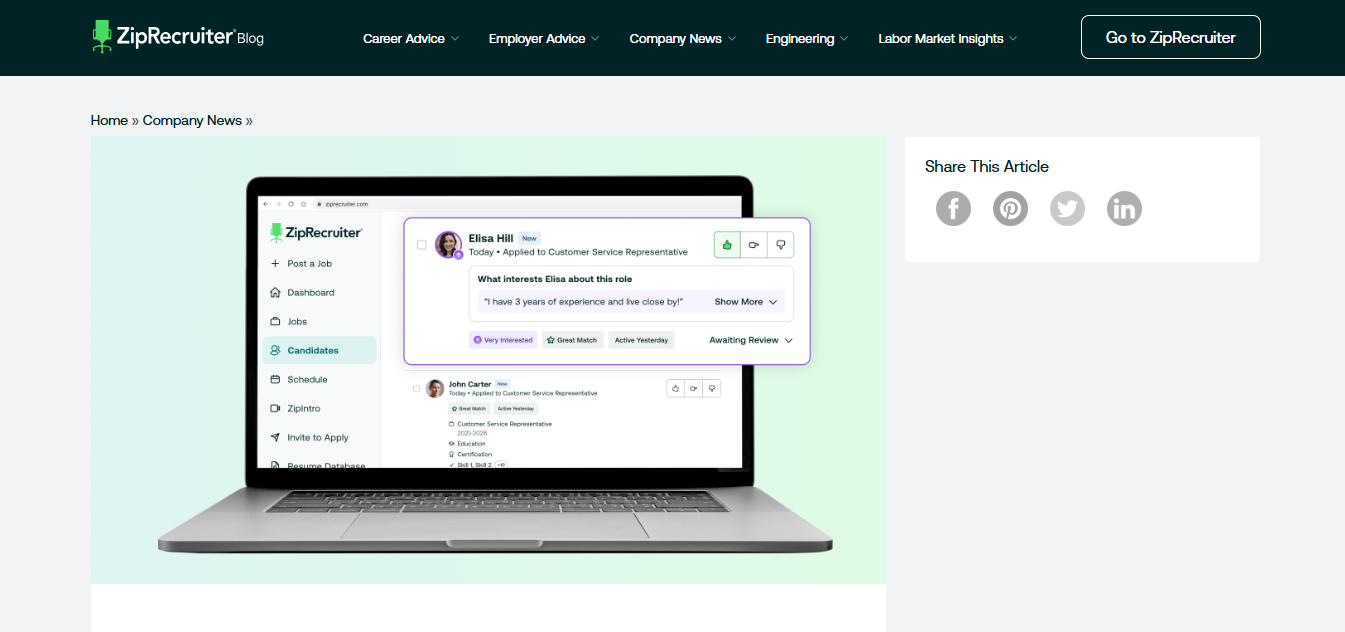
ZipRecruiter uses paid job advertising packages, with pricing depending on the selected arrangement. Employers should request a current quote and check posting limits before purchasing. It suits businesses prioritizing applicant reach, although advanced recruitment workflows may require another platform.
15. Loxo: Best for AI Powered Talent Sourcing
Loxo combines AI assisted candidate sourcing with applicant tracking and recruitment relationship management. It helps recruiters identify potential hires and organize outreach from one platform. Recruitment agencies can use its sourcing capabilities to build candidate pipelines before receiving applications.
Loxo includes talent search, an integrated ATS and CRM, automated outreach, and recruitment reporting. Its Talent Intelligence Platform also provides access to professional data for candidate discovery. These capabilities support proactive recruitment, particularly when suitable applicants are difficult to attract through job advertisements.
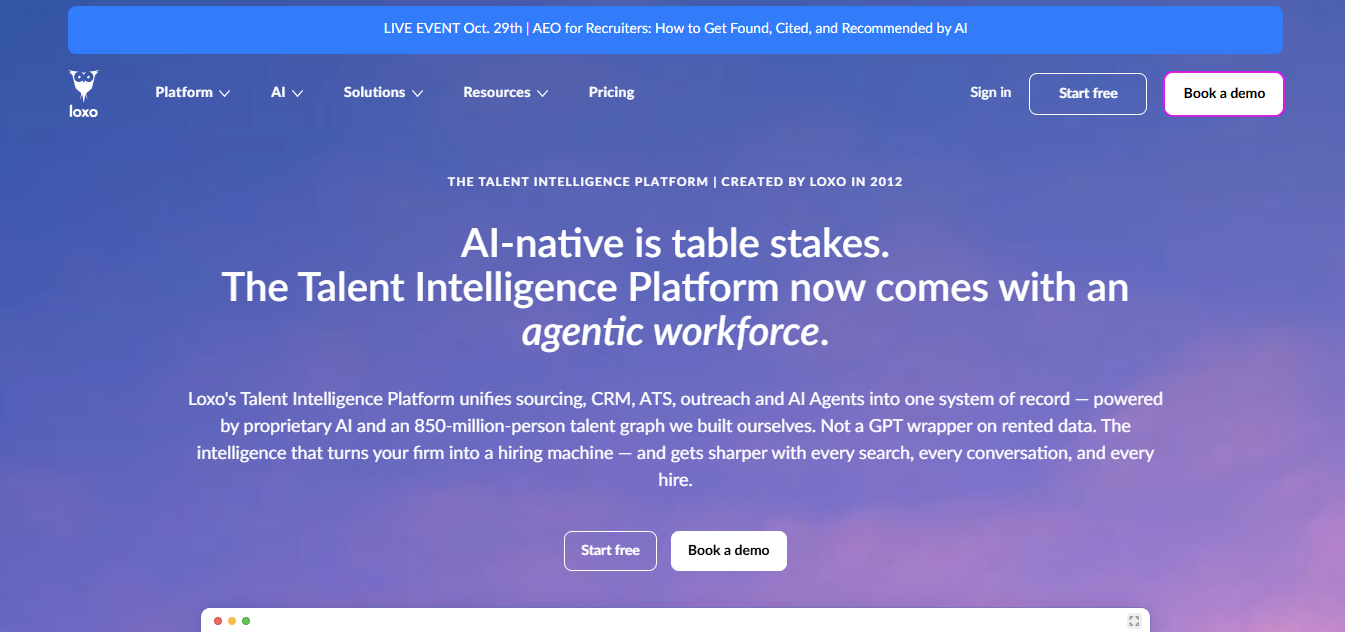
Loxo offers plan based purchasing arrangements, with final costs depending on selected capabilities. Its main advantage is combining sourcing, outreach, and candidate management in one system. However, organizations should confirm access limits, data coverage, and subscription costs before committing.
How We Selected the Top Recruiting Platforms
We selected these 15 recruiting platforms by comparing functionality, pricing, intended users, integrations, and recruitment workflows. Our research considered official vendor documentation, publicly available pricing, and product descriptions. We also examined the strengths and limitations of different software categories.
The evaluation focused on six criteria: applicant management, sourcing, automation, usability, pricing, and scalability. We considered whether each platform serves small employers, growing recruitment teams, large enterprises, or staffing agencies. We also examined whether published functionality addresses practical hiring needs rather than relying only on marketing claims.
This is a research based comparison, not an independently tested software ranking. We have not conducted controlled product trials or measured hiring outcomes across all 15 platforms. Pricing and functionality were reviewed using publicly available information, which may change after October 2026.
Which Recruiting Platform Is Best for Your Hiring Needs?
The right recruiting platform depends on hiring frequency, organizational size, recruitment budget, and candidate sourcing requirements. A startup filling three vacancies needs different capabilities from an enterprise recruiting across several countries. These recommendations help match the platform to the hiring task.
Best Recruiting Platforms for Startups and Small Businesses
Workable, JazzHR, Breezy HR, and Zoho Recruit are relevant options for startups and small businesses. Workable offers broad hiring functionality, while JazzHR focuses on applicant tracking. Breezy HR and Zoho Recruit provide free entry plans with restrictions.
Businesses hiring occasionally may only need an applicant database and interview scheduling. Growing startups often require job distribution, collaboration, and automated communication. Compare active job limits and subscription costs before moving to paid software.
Best Recruiting Platforms for Enterprises and Staffing Agencies
Greenhouse, iCIMS, and SmartRecruiters support complex enterprise hiring, while Bullhorn focuses on staffing agencies. Greenhouse emphasizes structured candidate evaluations and consistent interviewing. iCIMS and SmartRecruiters address configurable recruitment workflows across larger organizations.
Staffing agencies have different requirements because they manage employer clients alongside candidates. Bullhorn combines recruitment CRM, applicant tracking, and client account management. Manatal provides another option for agencies seeking published starting prices and AI candidate recommendations.
Best Platforms for Remote, Technical, and High Volume Hiring
LinkedIn Recruiter supports targeted professional sourcing, while Workable and Ashby offer broader recruitment management. LinkedIn’s search functionality helps identify candidates with specific technical experience. Ashby’s reporting capabilities help teams evaluate recruitment activity and hiring capacity.
Remote recruitment requires scheduling across time zones and communicating clearly with applicants. High volume hiring also benefits from application filters, automated messages, and organized interview processes. Employers should check international availability, supported languages, and integrations before choosing.
What Are the Different Types of Recruiting Platforms?
Recruiting platforms fall into four main categories: job boards, applicant tracking systems, recruitment CRMs, and sourcing tools. Each category addresses a different recruitment requirement. Some products combine several functions, while others focus on one activity.
Understanding these differences prevents employers from comparing unrelated products using identical criteria. A job advertising service cannot replace every function of an applicant tracking system. Likewise, an ATS may not provide the sourcing reach of a dedicated professional network.
Job Boards vs. Applicant Tracking Systems
Job boards attract candidates, while applicant tracking systems manage their progress through recruitment. Indeed and ZipRecruiter help employers advertise vacancies and receive applications. Their central purpose is bringing potential applicants into the hiring process.
An applicant tracking system, or ATS, organizes candidate records, screening, interviews, and hiring decisions. Greenhouse and JazzHR are examples of dedicated ATS software. Employers managing several open vacancies often need both candidate attraction and applicant tracking.
Recruitment CRM vs. Candidate Sourcing Platforms
Recruitment CRM software maintains candidate relationships, while sourcing platforms identify potential applicants. A recruitment CRM stores communication history, talent pool information, and engagement activity. Lever and Bullhorn combine these capabilities with applicant tracking.
Sourcing platforms help recruiters discover professionals who have not applied for a vacancy. LinkedIn Recruiter and Loxo support proactive candidate identification and outreach. Organizations can use both functions to maintain relationships with candidates for future hiring.
What Features Should You Look for in Recruiting Platforms?
The most important recruiting platform features are applicant tracking, candidate sourcing, automation, analytics, integrations, and data security. Their value depends on how your organization hires employees. A team recruiting monthly will need different functionality from a business filling one vacancy annually.
Applicant Tracking, Job Posting, and Candidate Sourcing
Applicant tracking keeps candidate information organized throughout screening, interviewing, and final selection. Greenhouse and Workable provide centralized recruitment pipelines that help teams monitor applications. Employers can also use screening questions and evaluation records to compare applicants.
Job posting functionality distributes vacancies through services like Indeed and LinkedIn. Candidate sourcing provides another approach by identifying professionals who may not apply independently. Choose software that supports the sourcing and applicant management methods your team actually uses.
AI Screening, Interview Scheduling, and Recruitment Automation
AI recruiting features can assist with candidate matching, application screening, and repetitive administrative work. Manatal and Loxo provide AI assisted sourcing and matching capabilities. Scheduling automation also reduces manual coordination between recruiters, applicants, and interviewers.
According to LinkedIn’s 2025 Future of Recruiting report, 37% of surveyed organizations were integrating or experimenting with generative AI in recruitment. However, automated recommendations can produce inaccurate or biased results. Employers should retain human oversight and assess AI functionality before relying on it.
Analytics, Integrations, and Data Security
Recruitment analytics help employers measure hiring performance using specific metrics. Time to hire measures how long recruitment takes, while cost per hire tracks recruitment spending. Ashby and Greenhouse offer reporting functions that support these evaluations.
Integrations connect recruitment software with services such as Microsoft Teams, Google Workspace, and HR management applications. Security controls should protect candidate records, restrict access, and support applicable privacy requirements. Check data retention, export options, and vendor security documentation before purchasing.
How Much Do Recruiting Platforms Cost?
Recruiting platform costs range from free entry plans to enterprise contracts with customized pricing. The final expense depends on recruiter accounts, organizational size, job capacity, and purchased functionality. Job advertising budgets and optional integrations can increase total spending.
Free vs. Paid Recruiting Platforms
Free recruiting platforms can support basic hiring, but they typically restrict capacity or advanced functionality. Zoho Recruit includes one active job per recruiter license in its free edition. Breezy HR’s Bootstrap plan supports one active position or candidate pool.
Indeed also offers eligible free job advertisements, although restrictions depend on the country. Its three post monthly limit applies to direct free listings in specified markets, including the United States and United Kingdom. Other countries currently have different policies, so employers should check local eligibility.
Paid plans provide expanded functionality, such as additional vacancies, configurable workflows, and advanced reporting. Manatal starts at $15 per user monthly with annual billing, while Workable starts at $299 monthly for its smallest company band. Compare the included capacity rather than treating the lowest advertised price as the cheapest complete solution.
Common Pricing Models and Hidden Costs
Recruiting software generally uses per user subscriptions, company size pricing, advertising charges, or custom enterprise contracts. Zoho Recruit charges by recruiter license, while Workable adjusts pricing according to organizational size. Indeed charges for sponsored advertising, and Greenhouse provides customized quotations.
Additional expenses may involve software implementation, candidate assessments, background checks, and premium support. Some vendors charge separately for AI credits, recruitment advertising, or advanced integrations. These expenses matter when comparing platforms with different starting prices.
For example, three Manatal Professional licenses cost $45 monthly under annual billing, before optional expenses. At that rate, the annual subscription totals $540 for those three licenses. This calculation demonstrates why comparing complete hiring requirements is more useful than comparing individual seat prices.
How to Choose the Best Recruiting Platform for Your Business
Choose a recruiting platform by matching its capabilities, pricing, and usability to your actual hiring requirements. Start with your annual recruitment workload and the challenges your current process creates. Then compare suitable products through demonstrations, trials, and vendor documentation.
Match the Platform to Your Hiring Volume and Budget
Estimate your expected vacancies, recruiter accounts, and annual software spending before comparing platforms. A business hiring five employees annually may not require enterprise recruiting software. Free job advertising or a basic ATS might handle its workload.
A company recruiting 50 employees annually may need automation, collaboration, and reporting. Its budget should include advertising, software subscriptions, and implementation costs. Calculate expected cost per hire to determine whether the investment provides measurable value.
Compare Usability, Integrations, and Scalability
Recruiting software should make everyday activities easier for recruiters and hiring managers. Test how quickly users can create vacancies, review applicants, and arrange interviews. An overly complicated interface can increase training requirements and reduce adoption.
Check integration compatibility with your existing email, calendar, payroll, and HR software. Also consider whether the platform supports additional hiring staff and increased application volume. Ask vendors about data migration, account permissions, and future subscription changes.
Check Reviews, Free Trials, and Customer Support
Compare independent customer reviews and available trials before signing a recruiting software contract. Look for feedback about system reliability, support responsiveness, and unexpected costs. Reviews from organizations with similar hiring requirements are particularly useful.
During a trial, create one sample vacancy and test the complete applicant process. Evaluate candidate communication, interview scheduling, reporting, and administrative controls. Also ask about cancellation policies and how to export candidate records.
Shortlist three recruiting platforms and test them against the same hiring scenario. Record the required features, total annual cost, and any workflow difficulties for each. This provides a practical comparison rather than relying solely on promotional descriptions.
Final Thoughts: Which Recruiting Platform Should You Choose?
The best recruiting platform is the one that matches your hiring needs without adding unnecessary costs. Workable suits growing teams, Greenhouse supports structured hiring, and Manatal provides an affordable entry point for AI assisted recruitment. LinkedIn Recruiter and Indeed address sourcing and job advertising, while Bullhorn specializes in staffing agencies.
Start by identifying where your current recruitment process needs improvement. Compare three relevant platforms using their actual features, limitations, and annual costs. A practical trial will help you choose software your team can use confidently.
Frequently Asked Questions About Recruiting Platforms
What Is the Best Recruiting Platform for Employers?
Workable, Greenhouse, and Indeed serve different employer hiring requirements. Workable combines sourcing and applicant management, while Greenhouse focuses on structured hiring. Indeed primarily helps employers advertise vacancies and attract applicants.
Which Recruiting Platforms Are Free to Use?
Zoho Recruit and Breezy HR offer free applicant tracking plans, while Indeed supports eligible free job advertisements. Their restrictions differ, including active vacancy limits and candidate data access. Review each provider’s current conditions before selecting a free option.
Is LinkedIn or Indeed Better for Recruiting?
LinkedIn Recruiter suits direct professional sourcing, while Indeed focuses on job advertising and incoming applications. LinkedIn lets recruiters search professional profiles and contact potential candidates. Indeed helps employers reach job seekers actively searching for vacancies.
Can AI Recruiting Platforms Replace Human Recruiters?
AI recruiting platforms can assist recruiters, but they cannot reliably replace human judgment throughout hiring. Tools like Manatal and Loxo help identify potential candidates and automate routine activities. Employers still need people to assess qualifications, conduct interviews, and make accountable hiring decisions.
Do Small Businesses Need an Applicant Tracking System?
Small businesses benefit from an ATS when managing applications manually becomes difficult. A company receiving hundreds of applications may need organized candidate records and interview tracking. Businesses hiring infrequently can start with free software before considering paid options.