
The decision of whether to use a VPS or a dedicated server is usually made when a website begins to exceed its space. Sites become sluggish, databases are slow to connect, the hosting plan previously working excellently suddenly becomes like a tight glove. That is when people begin to consider servers that are capable of sustaining their traffic and workloads.
A VPS or a virtual private server is a portion of a bigger computer. It is like having a server of your own, yet you share hardware with other users. A dedicated server is precisely as it is called, a full physical server dedicated solely to you. Both of them are strong upgrades over shared hosting, however, disparities begin to count when performance, uptime, or control begins to impact your bottom line.
The difficult thing is that both alternatives are good on paper. VPS hosting is more flexible and cheaper whereas dedicated hosting is more predictable and it has full control. The correct decision will depend on what you are running, the level of control required and the rate at which you are scaling your business. Knowing what each configuration actually delivers will save you the cost of purchasing more power than you actually require or worse hitting limits when your site can’t handle the load.
VPS vs Dedicated Server is what the actual choice is: to balance between cost, control, and capability in line with the expansion of your online presence.
A VPS is formed when a physical server is partitioned into several virtual environments with the help of a hypervisor. Every virtual server has its operating system and is capable of working as an autonomous device. Virtualization technology divides the CPU, memory and storage of a server into separate units hence you have your own space where you do not share with others using the same server.
Every VPS will contain its share of CPU cores, RAM, storage, and bandwidth. That is, the performance of your site will remain consistent even when there are surges in traffic of other users on the same physical server. You also can expand resources as your project expands, and this is the reason it would be a convenient bridge between shared hosting and other hosting plans.
VPS hosting can be of interest to small business, developers and sites that are on the rise. It offers greater control and reliability but at less cost and less maintenance than the higher costs and maintenance needs of a full physical server.

The First Step to Success Is Your Domain, Get the Domain You’ve Always Wanted—Search and Register Today.
A dedicated server is one physical computer that is rented by one user. The processing power, storage and bandwidth are all in your hands and there is no sharing of any hardware. This configuration provides a stable performance and it provides you with complete control over the configuration of the server not only in terms of the operating system but also in terms of the security configuration.
A dedicated server can be used to serve the high workloads which demand high performance and stability because the hardware is completely your own. It is also more secure since no other users are using the same system which is critical when dealing with sensitive information or in cases where compliance protocols are required.
Enterprise websites, eCommerce and high-intensity applications that rely on speed and uptime are typical of dedicated hosting. It is also popular in data intensive applications such as analytics applications or streams that require unlimited access to high performance computing capacity.
Related Article: What is the Difference Between VPS, KVM, and a Dedicated Server
The actual distinctions between VPS and dedicated hosting become evident as soon as you begin considering the performance, scalability, and control. They both can take serious workloads but the manner in which they go about it and the extent to which they can be pushed is a very different story.
Performance is based on the allocation and management of resources. In the case of a VPS, you are having a fixed portion of CPU cores, RAM and storage which has been cut out of a larger physical server. Such a configuration is good until another virtual machine running on the same hardware starts to demand more resources. The resultant slowdown is referred to as the noisy neighbor effect. It is one of the trade-offs of a shared physical hardware, even when all VPSs are isolated.
Dedicated servers are not concerned about such. All the resources are owned by one user and therefore performance is uniform regardless. Hosting benchmarks offered by providers have indicated that dedicated environments can be 25 to 40 percent faster to respond when under heavy load than similarly priced VPS plans. It is that scalability that causes companies that run database-intensive or customer-facing applications to tend toward dedicated systems as they begin to scale.
It is easy to scale a VPS. You will normally be able to upgrade RAM, CPU cores, or storage without downtime via your hosting dashboard. That will be useful with projects that are fast growing or have high traffic spikes.
The dedicated servers are scaled differently. Because you are only dealing with a single physical machine, upgrades will imply the addition or replacement of hardware. That is more planned but will provide you with predictable performance in the long term. An example of a SaaS startup would start on a VPS when the number of users is small. When daily traffic and database queries begin to stretch the limits, they can transition to a dedicated server and provide the consistency and control that they require without resource conflicts.
The question of security can be reduced to the degree of isolation of the environment. A VPS operates within a virtualized environment, and therefore, the users are segregated by the use of software. It is safe in most applications but still uses shared hardware. It can be important when you are dealing with confidential data or require certain compliance credentials.
Dedicated servers are fully physically isolated. You have the control of the whole system, the operating system, the firewall, and the permissions to access. Such an arrangement facilitates the compliance with such standards as HIPAA, GDPR, or PCI DSS, the system of which demands high standards of data handling and auditing. Healthcare, financial, or eCommerce companies can easily get committed due to this fact alone.
Both VPS and dedicated hosting may be managed or unmanaged. Managed hosting implies that the provider makes updates, monitoring, and maintenance. Unmanaged hosting leaves everything to you.
A VPS typically includes such tools as cPanel, which make administration easier. Dedicated servers go a step higher. You have complete root privilege and are able to configure the system at the operating system level. The flexibility can be great to developers and IT teams that wish to regulate performance tuning, security guidelines, or software installations and not be constrained by third parties.
The cheaper entry point is VPS hosting. Plans are usually between 10-80 dollars per month based on resources. A cost remains predictable even during scaling. It is cost effective on smaller projects or businesses that do not need heavy infrastructure or require a higher performance than shared hosting.
Dedicated servers have an initial cost of greater price, which is usually 100 to 400 dollars per month, and this will depend on the configuration and bandwidth. Although that is a larger investment, the value is reflected in stability and long-term performance. To ensure high traffic at all times, ROI works out better due to the absence of sharing or reaching performance limits. Dedicated hosting is frequently stressed by providers when dealing with customers who demand high uptime on a high utilization workload.
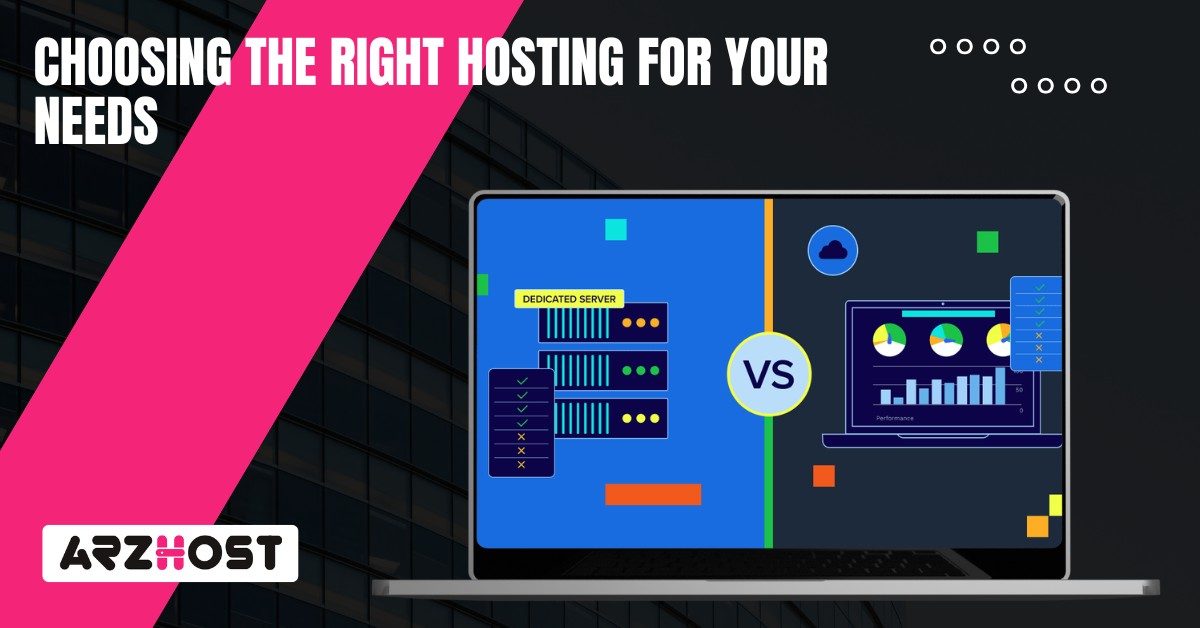
The choice of either VPS or dedicated hosting is a matter of what you actually require, rather than what may sound impressive on a plan paper. The correct decision will be determined by your amount of work, the rate of growth, and the time you want to devote to the technical part of affairs.
Begin with some simple questions.
When your business is such that it cannot afford downtime, then reliability must heavily factor into your decision. Consider the level of control desired as well.
When you have those answers then the picture becomes clearer. VPS hosting is appropriate to businesses that desire a fair, flexible balance at an affordable cost. Dedicated hosting is more appropriate when performance, control over data or compliance enter into the picture.
A VPS is optimal when dealing with smaller groups and projects that have started to gain momentum but do not have enormous infrastructure requirements. It is used by startups to run applications in the early stages as resources can be added on-demand without any long-term contracting. VPS environments are used by the developers to test and stage as they can install their own software at a low cost.
A VPS is frequently the intelligent compromise in case of expanding websites. It provides better performance than shared hosting and provides enough control to customize such things as caching, databases, or server settings. Consequently, you are able to cope with increased traffic without incurring unused capacity.
When traffic and Uptime Requirements Exceed the Scope of the virtualized hosting, a dedicated server will be reasonable. It is the default choice when it comes to large eCommerce web-sites, streaming platforms and enterprise systems that must be assured of resources at any given hour of the day.
Another significant factor is security. Firms that handle sensitive data, monetary payments, or the personal user data usually opt towards dedicated hosting to isolate it. Complete access to operating systems and hardware also gives the IT team liberty to customize all aspects of the stack to perform or to comply.
Dedicated hosting is justified as soon as the performance stability and security begin to influence the revenues or user experience. It is more of a long-term investment, but one that will pay off should you be making your infrastructure central to the running of your business.
This brief comparison demonstrates the difference between VPS and dedicated hosting in reality when you start aligning the key features that influence performance, control, and long-term value. Consult it when you need to know what setup to use in what you are building.
| Feature | VPS Hosting | Dedicated Server |
| Resource Sharing | Shares a physical server with other virtual environments, each separated by software. | Runs on a single machine with all hardware dedicated to one user. |
| Performance | Delivers solid performance but depends slightly on how the host manages shared resources. | Consistent, high-level performance with guaranteed access to all CPU power and storage. |
| Scalability | Simple to scale vertically by adding CPU or RAM through your provider’s dashboard. | Limited by the hardware inside the machine, which means upgrades take more planning. |
| Security | Isolated virtually but still relies on a shared physical environment. | Completely private setup with physical isolation and customizable security measures. |
| Cost | Budget-friendly and predictable, ideal for projects still growing. | Higher monthly cost but better long-term value for heavy or constant workloads. |
| Ideal Use Case | Fits small businesses, developers and growing websites with need of flexibility. | Optimal in business use, heavy traffic websites, and business environments where high performance is required or business requirements are airtight. |
This table provides a glimpse at the most important thing: the extent of control you require, the characteristics of your traffic, and the importance of performance stability to your activity.
In making a decision between a VPS and a dedicated server, it is just a matter of the extent to which your project must be controlled and the level of performance it must have. No right choice exists, just the one that suits you at this particular time. A VPS provides flexibility and reduced barriers to entry and that makes sense when you are growing or experimenting. A dedicated server is more like a commitment. It is created to be stable, work hard and have complete control over your hosting environment.
The best thing to do is to scale your hosting to your level of development rather than scale too high. Monitor performance and resource consumption trends on your site, and uptime. When your VPS begins to fail, it becomes natural to upgrade to a dedicated server, rather than gambling. Hosting is not only about infrastructure, but the foundation of how your site performs, scales, and attains user and search engine trust.
The First Step to Success Is Your Domain, Get the Domain You’ve Always Wanted—Search and Register Today.
Yes, by a noticeable margin. VPS provides you with dedicated services such as CPU, RAM and storage services, whereas shared hosting shares them with all users on the same server. Such separation gives your site better performance and reliability even when there is heavy traffic on other sites.
As soon as your site begins to reach bandwidth capacity or slows down during prime time that is an indication. In case your VPS is continuously at full load or requires certain settings that can not be provided by virtualization, a transition to a dedicated server will keep things running on track. Improvements are also made by businesses when the control of data, compliance, or uptimes become essential.
Absolutely. A dedicated server can be used to host several websites as long as there is enough storage and bandwidth.. They can be handled via virtual hosts or control panels such as cPanel and Plesk. Some hosting companies go further and assist in isolating environments per domain to ensure that the problems of one site do not impact on the other sites.
Yes. Cloud hosting provides on demand scalability and pay-as-you-go pricing. Such services as Amazon Elastic Compute Two, Google Cloud Compute Engine, and Microsoft Azure allow you to launch virtual machines that can be used like VPS or dedicated systems but with greater flexibility. The cloud model may be a good choice when projects require scalability within a short timeframe and global availability.
Upgrading to a more advanced VPS plan is normally available or you can upgrade to a dedicated server. The vast majority of providers allow you to scale downtime-free, but large migration might require brief maintenance. The valuable bit is keeping track of usage to ensure that you do not run out of memory or CPU capacity at a time when you are not in readiness to move.
This is dependent on the amount of time and experience. Managed hosting takes care of server updates, server monitoring, backups and security patches on your behalf. That is time-saving and less risky in case you are not a system administrator. Provided you would rather do everything by yourself, unmanaged plans are more hands-on but need more maintenance.
Indirectly, yes. Search engines prefer fast loading and online websites. Dedicated servers contribute to both of them as they offer stable performance and reduced latency. Alone hosting does not ensure rankings, but the higher uptime and faster response times will turn out to be a much more technical basis to support the SEO.
Read More:


230 Ave, New York NY, 10001, United States

