
Buying or selling a domain name isn’t just a quick online swap. Real money moves hands, ownership changes, and one mistake can cost thousands. That’s why smart buyers and sellers use escrow services. They provide order to what can be a risky transaction and ensure that people do not lose a domain or a payment in the midst of a deal.
Cases of scams, chargebacks, and fraudulent listings are still widespread in the domain market. Escrow services provide some cushion that keeps the two parties safe until things are cleared. They’re part of the same trusted framework used in property title and escrow services, only adapted for digital real estate.
A domain escrow service acts like the middle ground that keeps both sides of a domain deal safe. It works the same way title and escrow services protect property sales in real estate. The escrow agent receives the payment of the buyer and ensures that he or she is the real owner of the domain and has unlocked it to transfer it. Once all the checks have been completed, the agent transfers the money and affirms the sale.
The major participants are the escrow agent, the domain manager which is the registrar, the buyer and seller. All of them have a distinct role in the process, maintaining ownership records and payments in order. The agent transacts the money, the registrar ascertains the domain is in control and both parties are provided with evidence that the deal was processed correctly. That structure is what turns a casual online exchange into a secure and verifiable transaction.

Start Your Online Journey with ARZ Host! Get Fast, Secure, and Scalable Hosting.
Here’s how a typical domain escrow process unfolds:
One might imagine it as a flow: money flows in one way and domain control flows in the other and only in the center they interact when the checks are complete. The balance ensures that every side is secured at every move.
The digital asset market has serious buyers, but it also has scammers. There is a common appearance of fake listings, cloned domains and sellers that never show up again after receiving payment. Escrow prevents such issues before they begin.
An example is when a buyer sent money to buy a premium domain which turned out to be stolen. The registrar held the domain, the seller vanished, and the buyer did not have a way of recovering the money. With escrow, that money would never have been released until the transfer was verified. The loss would have been prevented entirely.
Peer-to-peer payments skip all the verification steps that escrow requires. That’s what makes them risky. Escrow services operate under regulatory oversight, maintain transaction logs, and follow the same trust framework used in property escrow. It’s the safety net that keeps the digital real estate market credible and enforceable.
The process of a safe domain sale begins with the selection of an escrow service that is licensed, open, and designed to safeguard all the actions of the transaction.
The best escrow service is one that appears transparent at the outset. Registered companies have their registration information, regulators and contacts published publicly. The real escrow providers are regulated at the state or federal level, and may be registered by the California Department of Financial Protection and Innovation or the comparable agencies in different jurisdictions. In case you are not able to find that information, then it is an issue.
Reputation speaks as much. Debit card transactions, customer feedback, and industry forums. Reliable escrow businesses that have been operating within the arena of large markets such as Sedo, Afternic or GoDaddy have already gained credibility in the eyes of serious investors. High volume platforms tend to possess more rigorous compliance mechanisms and this translates to less surprises upon making a sale.
Fee details should not be found in the small print, look before you begin the process. At the legitimate escrow providers, the service fee and the cost of each stage are broken down most of the time. The payment options must be safe and predictable. Authenticated credit cards, wire transfers or bank-supported digital payments are indicative of actual protection. Services that use encrypted platforms to process data and cross-verify the identity represent a high degree of security commitment.
False escrow sites are prevalent. They tend to steal the name or logo of established escrow firms, and redirect the money into a personal account. You can fall into it when you are in a hurry. Never use auto-complete options because you are sure to miss a more important detail. The site address always needs to be typed manually or using reliable links provided by an official site such as a registrar or a marketplace.
Watch out for odd communication patterns. If someone keeps pushing for direct payment or says escrow is unnecessary, that’s a sign something’s off. Real escrow agents communicate through official domains and rarely use personal emails. Lack of HTTPS, incomplete business details, or vague refund policies are also strong indicators that the service isn’t legitimate.
Another red flag is a site that moves too fast. Scammers rely on pressure tactics to stop buyers from checking credentials. If the company avoids basic questions about licensing or refuses to share documentation, step away.
Begin by ensuring that the company has a license to hold escrow funds. A majority of lawful escrow companies post their license number which can be compared in state regulatory sites. For example, users in the U.S. can search the California Department of Financial Protection and Innovation’s license lookup.
Second, verify business documents using such tools as FINCEN MSB registration search or WHOIS information on the company domain. When the business is several years old, the contacts are steady, and the information on the government records has been matched, it is a good indication.
For added safety, see whether large registrars or marketplaces publicly partner with the service. Companies like Escrow.com, Payoneer Escrow, or DAN.com often appear as integrated payment options on registrar platforms. That kind of visibility confirms both compliance and credibility.
When the deal involves valuable domains or large transfers, take ten extra minutes to verify these details. It’s the simplest step you can take to avoid losing money or ownership in a scam.
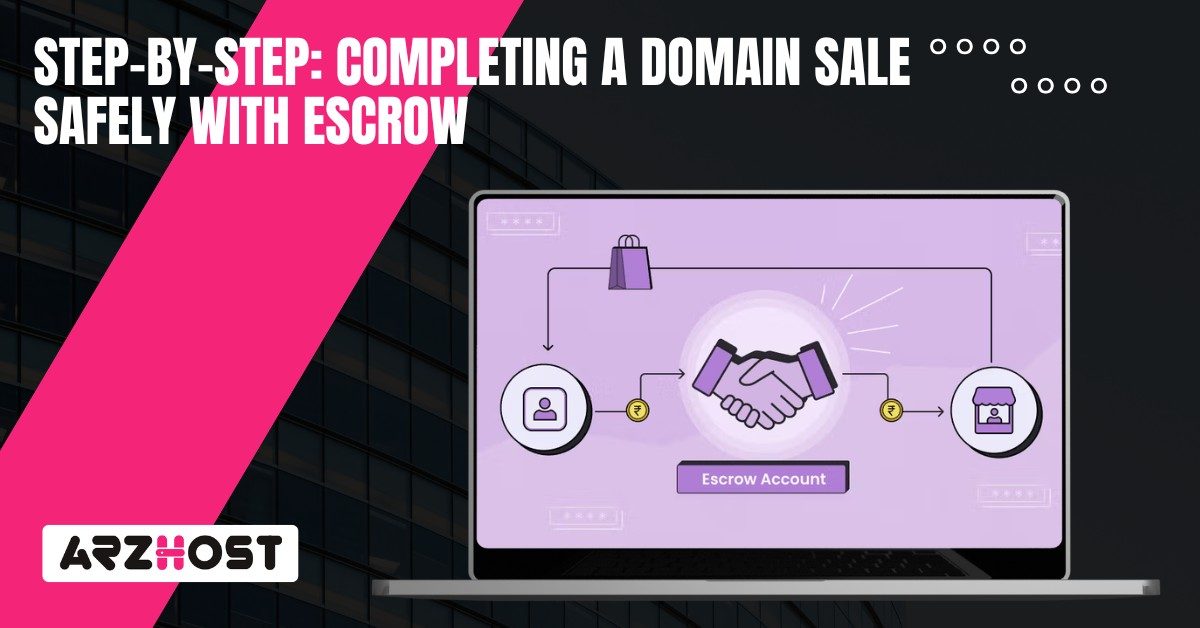
Every domain transfer has a rhythm to it. The key is letting the escrow process guide that rhythm so nothing slips through. Here’s how a secure transaction usually unfolds.
The basic conditions and the price are agreed by the buyer and the seller as well as the method of payment. That contract is locked in by the escrow platform so that you can have a record of what the two parties agreed to.
Both participants are registered with the escrow provider and check their information. The escrow agent inspects the agreement and establishes the place of dealings where the updates and confirmations will be seen.
The buyer deposits the full payment into the escrow account. The escrow company verifies the funds and confirms that the money is held safely before telling the seller to move forward.
The seller unlocks the domain at their registrar and provides the authorization code or pushes the domain to the buyer’s registrar. At this stage, timing matters. Delays usually come from registrar verification steps, not the escrow itself.
The purchaser verifies that the domain has displayed their name or account at WHOIS or on the registrar dashboard. After the ownership is verified, the buyer reports the escrow agent.
The escrow service releases the cash to the seller. This occurs once transfer has been confirmed by the registrar and both sides approve. It is the same principle as in the protection of funds in transfers of title through real estate.
The escrow firm completes the sale and gives the records of the transactions. Those records are worth keeping for tax reporting and for proving domain ownership history later.
Experience Power with ARZ Host’s Virtual Private Servers – Free Setup with the server.
A domain name can hold real value, and that’s exactly why it deserves a proper closing process. Escrow services make that possible. They introduce the same accountability of transfer of title of property to the digital realm. When the payment is made by a licensed escrow agent who will check the records of the registrar and ensure that every procedure is done, the two parties can walk away knowing that it was a fair and secure deal.
Shortcuts in domain transactions may save a couple of hours, yet tend to cost much more when something goes amiss. A legitimate escrow company prevents those mistakes before they happen. It documents the sale, protects the funds, and leaves a paper trail that stands up if ownership or payment ever gets questioned.
For anyone buying or selling domains regularly, escrow isn’t an extra service. It’s the system that keeps digital real estate transactions safe, clean, and recognized by regulators. Using one is less about trust and more about proof, and in this kind of market, proof is everything.
Build and Manage Your Website with ARZ Host
It relies on the speed of response by both sides and the cooperative nature of domain registrar. Smaller deals can be closed in less than a few days whereas bigger or international transactions can require a week or longer. The escrow company will not send money until all the verification procedures are followed, and it is not worth rushing the procedure, but it should be expected to be a short period of waiting.
No. The licensing regulations are regional and there are providers whose operations are more rigorously regulated than others. In the United States, seek registration with the California Department of Financial Protection and Innovation or a different state financial regulator. Verifying that license online only takes minutes and you may save yourself a fake escrow site in future.
Where the seller cannot perform on his part, the escrow company keeps the funds and refunds the buyers when the claim is verified. Since the finances remain in an indifferent account, either party cannot get them without submission by the other. Such a setup keeps conflicts out of the moneypits.
Cryptocurrency works with some licensed escrow companies, although the majority of them still use bank transfers or verified credit cards. Cryptocurrency transactions tend to require additional authentication measures to comply with anti-money laundering regulations and Know Your Customer policies. When making a transaction, it is always advisable to confirm that one accepts the types of payment before opening the transaction.
When the domain is properly transferred, you will be able to see it under your registrar account. The escrow agent would also ensure that ownership was updated by the registrar. Most companies will send a confirmation email or pull the record to your escrow dashboard, and you have evidence to use in accounting or tax reporting.
When the money is in escrow, the terms of cancellation are based on the terms that the two parties had agreed to initially. Typically the buyer is able to withdraw prior to a transfer being initiated by the seller though any step made may result in partial fees. In such cases, escrow agents make sure to abide by the written agreement precisely to ensure that it does not escalate into a dispute.
Such measures and protections reflect the accuracy of real estate escrow services, adapted to the rapidly changing environment of online property. The transfer of ownership remains safe, payment recorded and transactions supported by enforceable records by using a licensed provider.
Latest Posts:


230 Ave, New York NY, 10001, United States

