

Choosing the wrong geofencing company can waste budget and limit campaign results. Many providers promise precise targeting, but their accuracy, pricing, and features vary. That makes comparing geofencing companies harder than it should be.
Poor targeting can mean wasted impressions, weak store visits, and unclear campaign performance. Some providers suit advertisers, while others serve developers, retailers, or enterprise teams. Choosing without understanding these differences can lead to the wrong investment.
This guide compares 10 top geofencing companies for smarter targeting. You will learn about their features, ideal uses, pricing approaches, strengths, and limitations. You will also see how to compare accuracy, attribution, privacy, and service models.
Quick Comparison of the Best Geofencing Companies
The best geofencing companies serve different needs, including advertising, app development, location intelligence, and spatial analysis. GroundTruth and Simpli.fi focus heavily on advertising, while Radar and Mapbox serve developers. Foursquare and Esri provide broader location data and spatial intelligence capabilities.
| Company | Best For | Provider Type | Key Capability | Pricing |
| GroundTruth | Location advertising | Advertising platform | Geofencing and visit measurement | Quote based |
| Propellant Media | Managed campaigns | Advertising agency | Addressable geofencing and CTV | Quote based |
| Simpli.fi | Multi location advertising | Advertising platform | Addressable and programmatic targeting | Quote based |
| Radar | Mobile applications | API and SDK provider | Geofence triggers and location verification | Usage based plans |
| Bluedot | Arrival experiences | Location technology | Arrival detection and mobile geofencing | Quote based |
| Foursquare | Location intelligence | Data platform | POI data and location analysis | Product dependent |
| StackAdapt | Programmatic campaigns | Advertising platform | Display, video, audio, and CTV | Campaign dependent |
| Airship | Mobile engagement | Customer engagement platform | Location triggered messaging | Plan dependent |
| Esri | Enterprise spatial analysis | GIS platform | Real time geofencing and mapping | Product dependent |
| Mapbox | Developer location features | Mapping platform | Mobile geofence monitoring | Usage based |
The right provider depends on what you want geofencing to accomplish. Advertisers usually need targeting and attribution, while developers need APIs, SDKs, and reliable background location events. Enterprise teams may value mapping, location data, security, and large scale integrations more than advertising tools.
Top Geofencing Companies and Platforms
The 10 top geofencing companies are GroundTruth, Propellant Media, Simpli.fi, Radar, Bluedot, Foursquare, StackAdapt, Airship, Esri, and Mapbox. They cover use cases ranging from advertising campaigns to mobile application development. The sections below explain where each provider fits and where limitations may matter.
1. GroundTruth
GroundTruth is best suited to businesses focused on location based advertising and store visit measurement. Its Blueprints technology maps physical places and helps distinguish meaningful visits from nearby movement. GroundTruth also evaluates signals using factors such as GPS source, operating hours, device behavior, and travel speed.
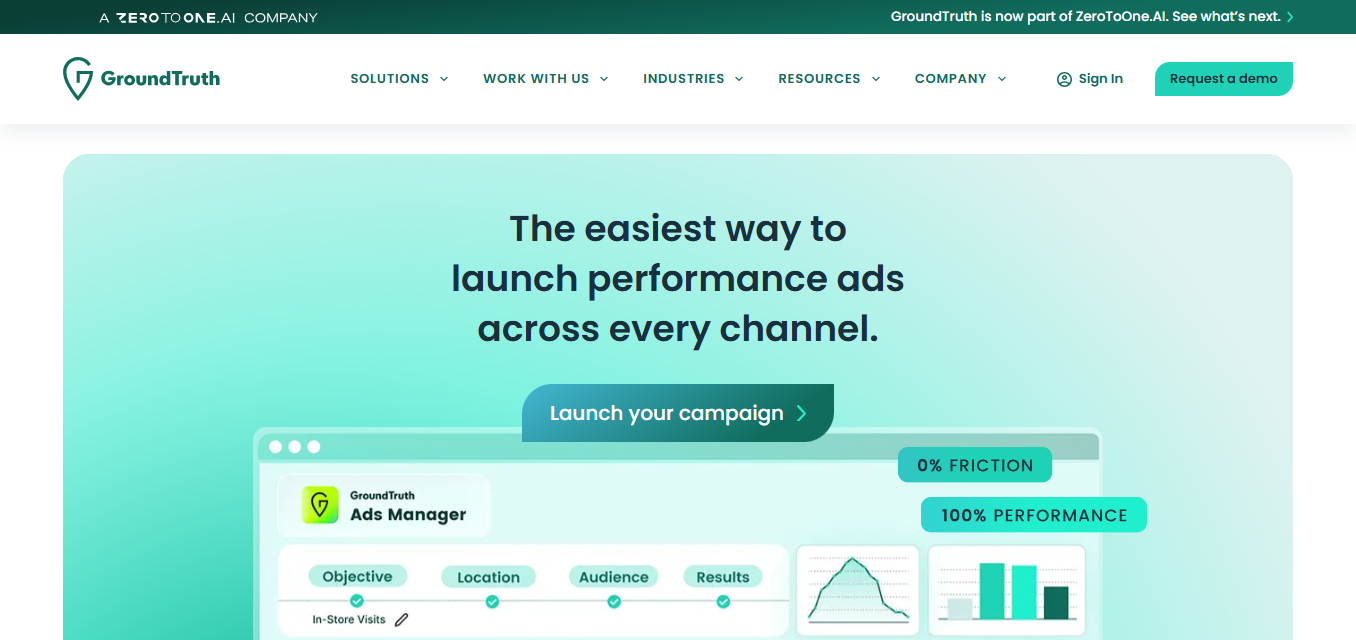
GroundTruth works well for retailers, restaurants, agencies, and multi location businesses seeking measurable physical visits. Its 14 day observed visit window connects eligible advertising exposure with later visits to mapped locations. A limitation is that buyers needing only developer APIs may find a dedicated location SDK provider more appropriate.
2. Propellant Media
Propellant Media fits businesses wanting managed geofencing advertising rather than a purely self service platform. Its services include geofencing, addressable targeting, programmatic display, and connected television campaigns. This approach suits organizations that want specialists to manage strategy, activation, and optimization.
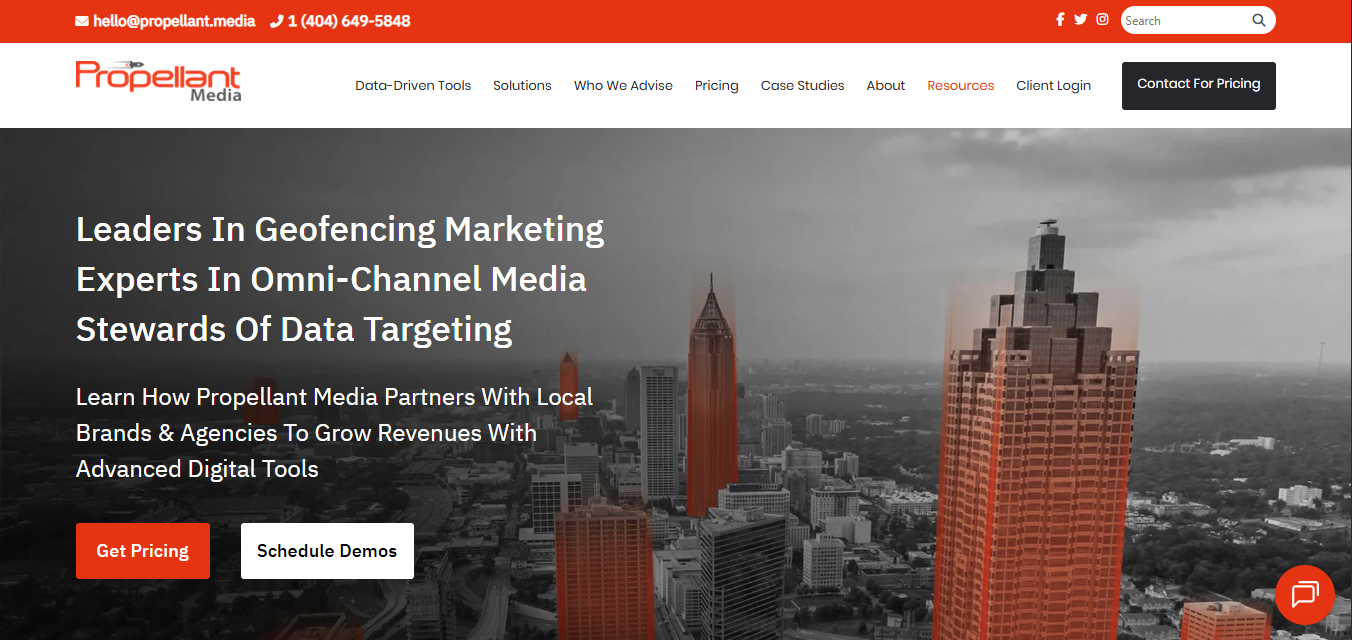
Propellant Media can be useful for dealerships, retailers, agencies, healthcare marketers, and local service businesses. Its managed model reduces the internal work required to operate programmatic campaigns. Businesses wanting complete hands on platform control should compare self service alternatives before committing.
3. Simpli.fi
Simpli.fi is designed for advertisers that need programmatic geofencing across many locations and audiences. It supports addressable targeting, custom geofences, conversion measurement, and other programmatic advertising functions. This makes it relevant to agencies, franchises, and multi location brands.
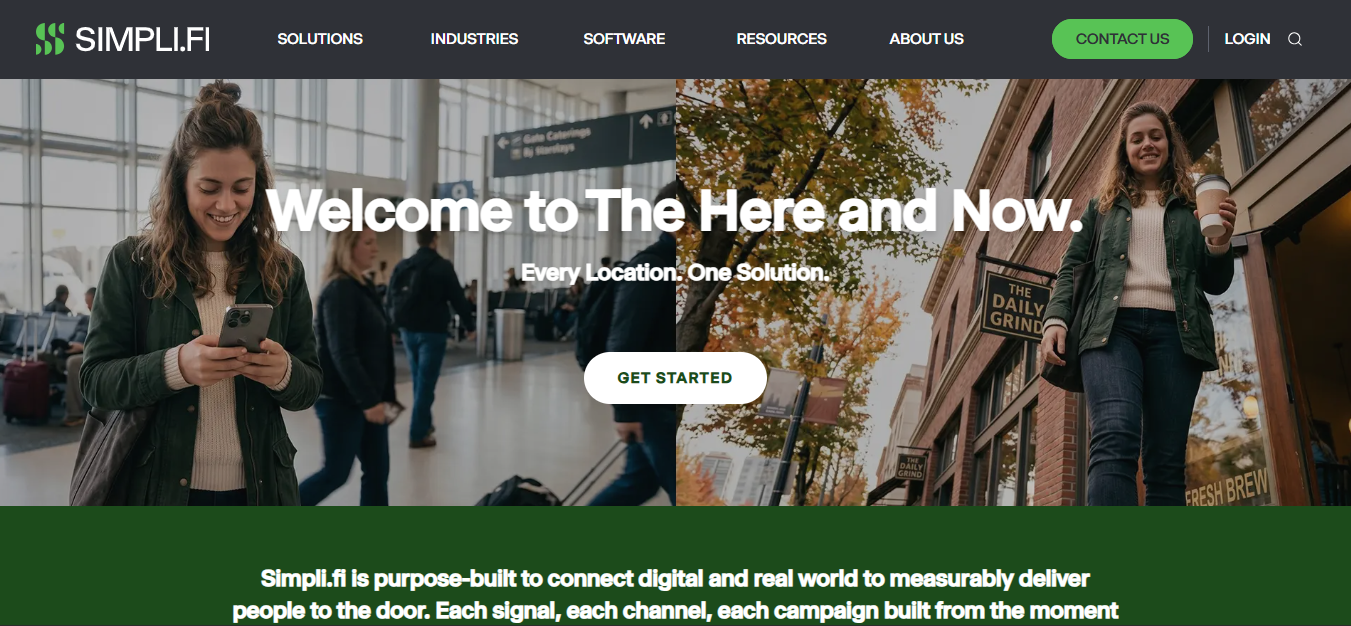
The platform can support campaigns involving households, stores, competitors, and other selected locations. Its programmatic focus gives experienced advertising teams more control than many fully managed services. Smaller businesses without programmatic experience may need additional support or an agency partner.
4. Radar
Radar is a strong choice for developers building geofencing directly into mobile applications. Its SDKs and APIs use location signals from GPS, WiFi, IP information, and device sensors. Radar currently reports more than 1 billion API requests daily across more than 300 million installed devices.
Developers can use Radar for geofence events, trip tracking, fraud detection, arrival experiences, and geographic compliance. This makes it useful for retail, gaming, delivery, financial technology, and logistics applications. Radar is less relevant for companies seeking a managed advertising campaign rather than location infrastructure.
5. Bluedot
Bluedot focuses on precise mobile location experiences and customer arrival detection. Its technology can support geofence entry events, arrival workflows, curbside experiences, and location triggered actions. These capabilities are particularly relevant when a business already has a customer facing mobile application.
Restaurants and retailers can use arrival technology for experiences such as pickup preparation and drive through operations. The platform is more focused on application experiences than traditional display advertising. Buyers primarily seeking media buying should therefore compare advertising focused geofencing providers.
6. Foursquare
Foursquare is best known for location intelligence, place data, and geographic context. Its Places products cover more than 100 million commercial points of interest across 247 countries and territories. Foursquare combines human, software, and third party verification to maintain its location records.
Its November 2026 open Places release listed 109,577,627 points of interest. Businesses can use this data for analytics, audience understanding, applications, business intelligence, and location based experiences. Foursquare is particularly relevant when accurate place information matters as much as advertising activation.
7. StackAdapt
StackAdapt suits advertisers that want geofencing within a broader programmatic media strategy. Its platform supports advertising formats such as display, native, video, audio, and connected television. Location targeting can therefore work alongside contextual, audience, and other programmatic targeting methods.
This approach can help agencies and brands coordinate location campaigns across several media formats. StackAdapt is broader than a geofencing only product, which may benefit advertisers wanting one programmatic environment. Businesses requiring developer location APIs should consider dedicated location technology instead.
8. Airship
Airship is useful for businesses that want location events to trigger mobile customer engagement. Its automation tools can initiate messaging when eligible users enter or leave selected locations. Airship currently allows up to 20 locations within a location triggered automation or sequence.
The location trigger works with geofences and beacons through its supported integration. This model suits brands using mobile messaging, customer journeys, and application engagement together. It is less suitable for businesses seeking a traditional geofencing media buying platform.
9. Esri
Esri fits enterprise organizations needing geofencing within mapping and real time spatial analysis. ArcGIS Velocity can compare moving data with static or changing geographic boundaries. It also supports dynamic geofencing where incoming geofence data updates during real time analysis.
Relevant uses include fleet monitoring, asset tracking, operational mapping, and incident detection. These applications differ from consumer advertising but still rely on geographic boundaries and location events. Esri makes more sense for geographic information workflows than simple local advertising campaigns.
10. Mapbox
Mapbox is designed for developers building mapping and location functions into digital products. Its mobile technology can support geofence monitoring and application actions tied to location boundaries. Developers can combine geofencing with maps, navigation, search, and other location features.
Mapbox can fit delivery applications, travel products, mobility services, and customer facing mobile experiences. Its value is strongest when geofencing is part of a broader mapping product. Businesses wanting managed advertising should look toward advertising platforms instead.
How We Selected the Top Geofencing Companies
We evaluated the top geofencing companies using accuracy, targeting, attribution, pricing, integration, support, and scalability. We also considered whether each provider serves advertisers, developers, or enterprise location teams. This prevents unrelated services from being ranked as though they solve identical problems.
Geofencing Accuracy and Location Data Quality
Location accuracy depends on reliable signals, precise boundaries, quality place data, and strong filtering. Signals can come from sources such as GPS, WiFi, cellular networks, and device information. Providers should explain how they identify stale, suspicious, or inaccurate signals before measuring visits.
GroundTruth checks factors such as GPS origin, operating hours, movement speed, and polygon placement. Foursquare uses human, software, and third party methods to verify place information. These processes illustrate why location data quality deserves attention during provider selection.
Targeting, Attribution, and Reporting Features
A useful platform should connect location targeting with measurable business outcomes. Important capabilities include polygon targeting, address targeting, audience creation, visit measurement, conversion tracking, and campaign reporting. Advertisers should check exactly how each provider defines an attributed visit.
Attribution windows can affect reported campaign results significantly. GroundTruth, for example, uses a 14 day window for observed visits after advertising exposure. It also applies last touch attribution when assigning credit to an eligible visit.
Pricing, Integrations, Support, and Scalability
Price should be evaluated alongside integrations, campaign requirements, support, and expected scale. Providers may charge through media spending, subscriptions, management fees, usage pricing, or custom enterprise agreements. Two platforms with similar advertised prices can therefore produce very different total costs.
Integration requirements also vary by use case. Developers may need APIs and SDKs, while advertisers may need reporting and audience integrations. Multi location organizations should confirm whether the system can manage hundreds or thousands of geographic targets efficiently.
Which Geofencing Company Is Best for Your Business?
The best geofencing company depends on whether you need advertising, app functionality, location data, or enterprise spatial analysis. GroundTruth and Propellant Media fit advertising use cases, while Radar and Mapbox fit application development. Foursquare and Esri are better aligned with broader location intelligence and geographic analysis.
Best Geofencing Companies for Small and Local Businesses
GroundTruth and Propellant Media are relevant options for local businesses focused on customer acquisition. Retailers, restaurants, dealerships, and service businesses can use location boundaries to reach nearby audiences. Managed campaign support can also help teams without internal programmatic expertise.
Small businesses should compare minimum budgets before selecting a provider. They should track results such as qualified visits, calls, bookings, and purchases instead of impressions alone. A controlled campaign test can show whether location advertising produces enough value.
Best Geofencing Platforms for Marketing Agencies
Simpli.fi, GroundTruth, and StackAdapt fit agencies managing location campaigns for multiple clients. Agencies often need audience controls, reporting, programmatic media access, and several advertising formats. These features can make campaign management easier across different client goals.
Agencies should also compare account organization, reporting access, service support, and campaign controls. White label capabilities may matter when reports are delivered directly to clients. Pricing should be evaluated across the complete client portfolio rather than one campaign.
Best Geofencing Providers for Enterprises and Multi Location Brands
GroundTruth, Foursquare, and Esri address different enterprise location needs. GroundTruth focuses on advertising and visitation, while Foursquare provides large scale place data. Esri supports enterprise mapping and dynamic spatial analysis.
Large organizations should examine data governance, integration options, security requirements, and support commitments. Geographic scale also matters when managing hundreds of stores, facilities, or service areas. Enterprise buyers should request technical demonstrations before committing to long term contracts.
Best Geofencing Solutions for App Developers
Radar, Mapbox, and Bluedot are more relevant when geofencing must work inside an application. Developers can use these technologies for arrival detection, entry events, exit events, and location triggered workflows. They should compare documentation, reliability, operating system support, and battery impact.
Radar stands out for scale, reporting more than 1 billion API requests per day. Mapbox is useful when geofencing must connect closely with maps and other location services. Bluedot fits customer arrival experiences where timing and proximity matter.
Best Geofencing Companies for Retail and Restaurants
GroundTruth, Bluedot, and Radar address several common retail and restaurant location needs. GroundTruth supports advertising and visitation measurement, while Bluedot and Radar support mobile arrival experiences. The right choice depends on whether the goal is acquisition or application functionality.
A restaurant may use advertising geofencing to reach nearby customers. The same restaurant could use app geofencing to prepare an order when a customer approaches. These are different workflows and may require different providers.
What Types of Geofencing Companies Can You Hire?
Geofencing providers generally fall into four categories: managed agencies, advertising platforms, developer providers, and location intelligence platforms. Each category solves a different business problem. Identifying the right category first makes provider comparison more accurate.
Managed Geofencing Agencies
Managed agencies operate campaigns for companies that prefer external advertising support. They may handle strategy, location selection, media buying, optimization, creative work, and reporting. Propellant Media represents this service focused model.
Managed support can reduce workload for teams without programmatic advertising specialists. However, management charges can increase total campaign costs. Buyers should confirm data access, reporting ownership, and contract terms before signing.
Self Service Geofencing Advertising Platforms
Self service platforms let internal marketing teams control campaigns directly. Platforms such as GroundTruth and Simpli.fi can provide targeting, audience, budget, and measurement controls. They generally suit marketers with enough experience to manage location advertising internally.
Self service can provide greater transparency and day to day control. It can also require more staff time for setup, optimization, and reporting. Training and account support should therefore be included in the buying decision.
Geofencing APIs and SDK Providers
API and SDK providers give developers tools for building location functions into software. Radar and Mapbox support geofence monitoring and other location based application functions. Their customers usually integrate the technology rather than purchasing advertising media.
Developer teams should compare usage limits, documentation, reliability, security, and supported operating systems. Location permission handling also affects whether background features work correctly. Pricing may increase as API volume or application usage grows.
Location Intelligence and Enterprise Platforms
Location intelligence platforms help organizations understand places and geographic relationships. Foursquare provides extensive point of interest data, while Esri provides mapping and spatial analytics. These systems can support analytics, planning, operations, and product development.
Foursquare reported 109,577,627 POIs in its November 2026 open dataset release. Esri supports dynamic geofencing for real time spatial analysis. These capabilities extend well beyond advertising campaigns.
What Features Should You Compare in a Geofencing Platform?
Compare location precision, targeting controls, media support, attribution, reporting, and integration before choosing a platform. Similar feature names do not always mean identical technology. Every feature should connect with a specific campaign or product requirement.
Radius, Polygon, and Addressable Geofencing
Radius, polygon, and addressable geofencing define target areas differently. Radius targeting creates a circle around a coordinate, while polygon targeting follows selected geographic boundaries. Addressable geofencing uses physical addresses to create targeting areas.
Polygon targeting can help avoid unrelated neighboring locations where property shapes are irregular. Radius targeting may be sufficient for broader areas where exact boundaries matter less. Addressable targeting is useful when advertisers already have selected household or property addresses.
Competitor Targeting and Audience Segmentation
Competitor targeting reaches eligible audiences around selected rival locations. Businesses can use this approach around places such as dealerships, restaurants, gyms, or retail stores. Audience segmentation may also incorporate visitation behavior or first party customer information.
Advertisers should avoid assuming every location can be targeted freely. Sensitive places can face privacy, platform, or legal restrictions. Provider policies should be reviewed before launching campaigns around regulated or sensitive locations.
Display, Mobile, CTV, and Programmatic Advertising
Geofencing can support advertising across display, mobile, video, audio, and connected television channels. Providers such as GroundTruth, Simpli.fi, and StackAdapt combine location targeting with broader media activation. Channel availability should match where the intended audience actually spends attention.
Using more media channels does not automatically improve campaign performance. Marketers should compare conversions, visits, acquisition costs, and incremental outcomes by channel. The budget can then move toward placements producing stronger business results.
Foot Traffic Attribution and Store Visit Measurement
Foot traffic attribution connects advertising exposure with later visits to physical locations. Providers use eligible location signals and mapped places to identify potential visits. Verification rules can reduce false visits caused by nearby movement or drive by traffic.
GroundTruth waits through a verification period before finalizing observed visit data. Its current methodology uses a 14 day post exposure window and last touch attribution. Buyers should compare these rules because attribution methods can change reported results.
How Accurate Is Geofencing Advertising?
Geofencing accuracy depends on location signals, mapping quality, boundary design, and provider verification methods. No single accuracy percentage applies to every platform or campaign. Dense urban areas, weak signals, and poorly mapped locations can reduce precision.
What Affects Location Accuracy?
GPS quality, WiFi data, device settings, building density, and signal freshness can affect location accuracy. Providers may also detect suspicious devices, stale coordinates, or unrealistic movement patterns. Good filtering reduces the chance of counting invalid location events.
GroundTruth checks whether a signal falls inside mapped polygons and whether movement suggests a drive by. These checks illustrate why raw coordinates alone are not enough for reliable visit measurement. Buyers should ask every provider how location signals are validated.
Polygon Geofencing vs Radius Targeting
Polygon geofencing follows custom boundaries, while radius targeting creates fixed circles around coordinates. Polygons can match physical properties more closely when stores or venues have irregular shapes. Radius targeting is simpler but may include neighboring roads or businesses.
Neither method is automatically best for every campaign. Large venues may work well with polygons, while broader proximity campaigns may only need radius targeting. The targeting method should reflect the location and desired customer behavior.
How Much Do Geofencing Companies Cost?
Geofencing costs depend on campaign scale, provider type, pricing model, targeting complexity, and service level. Advertising providers commonly combine media spending with platform or management costs. Developer platforms often charge through usage plans or custom enterprise agreements.
Common Geofencing Pricing Models
Common pricing methods include CPM pricing, subscriptions, managed service fees, and usage based billing. CPM means paying for every 1,000 advertising impressions delivered. Developer products may instead charge according to API calls, application usage, or enabled capabilities.
Enterprise pricing is often customized. Requirements such as data volume, integrations, geographic scale, and support can influence final costs. Buyers should compare quotes using the same requirements to make comparisons meaningful.
Campaign Minimums, Management Fees, and Media Spend
Campaign costs can include advertising spend, minimum commitments, management fees, and creative expenses. Media spend pays for actual advertising delivery across supported channels. Management fees may cover planning, optimization, account support, and reporting.
Minimum spending requirements can make some platforms unsuitable for smaller businesses. Buyers should ask whether minimums apply monthly or across the complete campaign. They should also confirm which costs are included in every quoted figure.
What Affects the Total Cost of Geofencing?
Location count, audience size, campaign duration, media format, and reporting requirements affect total costs. Managing 500 locations typically requires more setup than targeting five stores. Advanced measurement can also increase platform or service requirements.
Developer costs may grow with users or API traffic. Advertising costs may change with inventory demand, channel selection, and impression volume. Comparing total expected cost provides a clearer picture than comparing headline prices.
Managed vs Self Service Geofencing: Which Should You Choose?
Choose managed geofencing when you need external expertise and self service when you want direct campaign control. Managed services fit teams without programmatic advertising staff or enough time for daily optimization. Self service platforms fit experienced marketers who want to manage targeting and budgets themselves.
The decision usually comes down to expertise, workload, control, and cost. Managed services may cost more but reduce internal campaign work. Self service can offer greater control while requiring more staff involvement.
Geofencing vs Geotargeting: What Is the Difference?
Geofencing targets defined physical boundaries, while geotargeting usually targets broader geographic areas. A geofence can surround a store, venue, campus, or competitor property. Geotargeting commonly uses areas such as cities, postal codes, states, or regions.
Use geofencing when specific physical locations influence buying behavior. Use broader geotargeting when reach matters more than precise visitation. Some campaigns can combine both approaches for wider coverage and location precision.
How Do Geofencing Companies Measure Campaign Results?
Geofencing companies measure performance through impressions, clicks, visits, conversions, cost per visit, and other business outcomes. The most useful metric depends on the campaign objective. Retail campaigns may prioritize store visits, while service businesses may prioritize calls or leads.
Store Visits, Conversions, and Cost per Visit
Store visits measure physical arrivals, while conversions measure selected actions after advertising exposure. Conversions can include purchases, reservations, calls, or completed forms. Cost per visit divides relevant campaign spending by attributed visits.
Marketers should define success before campaigns begin. A campaign designed for store traffic should not be judged only through click through rates. Consistent measurement makes provider comparisons more meaningful.
Attributed Visits vs Incremental Visits
Attributed visits occur after advertising exposure, while incremental visits estimate visits caused by advertising. Some exposed customers may have visited even without seeing an advertisement. Attribution alone therefore does not prove that advertising created every recorded visit.
Incrementality analysis compares exposed behavior with an appropriate baseline or control group. Buyers should ask providers how campaign lift is calculated and validated. Clear methodology is particularly important when large budgets depend on reported foot traffic.
What Are the Privacy and Compliance Risks of Geofencing?
Geofencing can create privacy concerns when precise location information is collected, shared, or activated improperly. Businesses should pay close attention to consent, sensitive locations, retention policies, and data sharing practices. Healthcare facilities, shelters, religious sites, and other sensitive places require particular care.
Providers should explain how users give permission and how location information is protected. Businesses should also evaluate applicable laws and advertising platform policies before launching campaigns. Privacy compliance should be treated as a buying requirement rather than an optional feature.
Common Mistakes to Avoid When Choosing a Geofencing Company
The biggest mistake is comparing advertising agencies, APIs, SDKs, and location intelligence platforms as identical services. These providers solve different problems involving advertising, application development, analytics, and enterprise mapping. Buyers should identify their main use case before comparing individual companies.
Choosing only by price is another common mistake. Lower costs provide little value if targeting, attribution, reporting, or support cannot meet campaign requirements. Buyers should also avoid judging success only through impressions instead of visits, leads, or revenue.
Is Geofencing Advertising Worth It?
Geofencing advertising can be worthwhile when physical location strongly affects customer intent and business outcomes. Restaurants, retailers, dealerships, entertainment venues, and local services often have clear geographic relationships with customers. Location targeting can help these businesses focus advertising around relevant places.
Geofencing may offer less value when customer location has little connection with purchase behavior. Businesses should test performance using measurable outcomes such as qualified visits, conversions, and revenue. Comparing results with other targeting approaches can show whether geofencing adds incremental value.
Geofencing Trends to Watch in 2026
Important 2026 trends include richer place data, stronger privacy controls, real time location intelligence, and broader cross channel activation. Foursquare’s November 2026 release lists more than 109.5 million points of interest in its open dataset. The release also reported more than 5.8 million updated records since the previous release.
Enterprise systems are also using more dynamic geofencing for operational analysis. Esri supports continuously updated geofences within real time analytic workflows. Developers are meanwhile using location APIs at significant scale, with Radar reporting more than 1 billion requests daily.
Frequently Asked Questions About Geofencing Companies
What Does a Geofencing Company Do?
A geofencing company provides technology or services based on virtual geographic boundaries. Advertising providers use boundaries to target audiences and measure visits. Developer providers use them to trigger application actions when devices enter or leave selected areas.
Can Geofencing Work Without a Mobile App?
Yes, advertising geofencing can work without your business owning a mobile application. Advertising platforms can activate eligible location audiences through broader advertising ecosystems. Application based geofencing does require an installed application with appropriate location permissions.
Can Businesses Target Competitor Locations With Geofencing?
Some geofencing advertising platforms allow businesses to target eligible audiences around competitor locations. Common examples include restaurants targeting nearby restaurants or dealerships targeting rival automotive locations. Campaigns must still follow provider rules, privacy requirements, and restrictions involving sensitive places.
How Much Should a Small Business Spend on Geofencing?
There is no universal geofencing budget that fits every small business. Spending should reflect campaign goals, customer value, provider minimums, media costs, and expected conversions. A controlled test can establish whether the channel produces an acceptable cost per visit or acquisition.
Small businesses should define measurable goals before increasing spending. Useful goals can include bookings, qualified leads, sales, or physical visits. Budgets should increase only when performance data supports additional investment.
Which Geofencing Company Is Best for Foot Traffic Attribution?
GroundTruth is particularly relevant for businesses prioritizing advertising driven store visit measurement. Its Blueprints system maps physical places and applies verification before observed visits are finalized. GroundTruth currently defines an observed visit as a visit within 14 days after eligible advertising exposure.
Foursquare is another important option when location intelligence and place data are central requirements. Its Places products cover more than 100 million commercial points of interest worldwide. The better choice depends on whether the priority is advertising attribution or broader location intelligence.
Final Thoughts
The top geofencing companies solve very different location based problems. GroundTruth, Propellant Media, and Simpli.fi focus strongly on advertising, while Radar, Bluedot, and Mapbox serve application developers. Foursquare and Esri address wider location intelligence and enterprise mapping needs.
Start by deciding whether you need advertising, application functionality, location data, or spatial analytics. Then compare accuracy, attribution, pricing, integrations, privacy, and support within that provider category. This approach makes it easier to choose a geofencing company that fits your actual business goals.